
1) There are three living elephant species
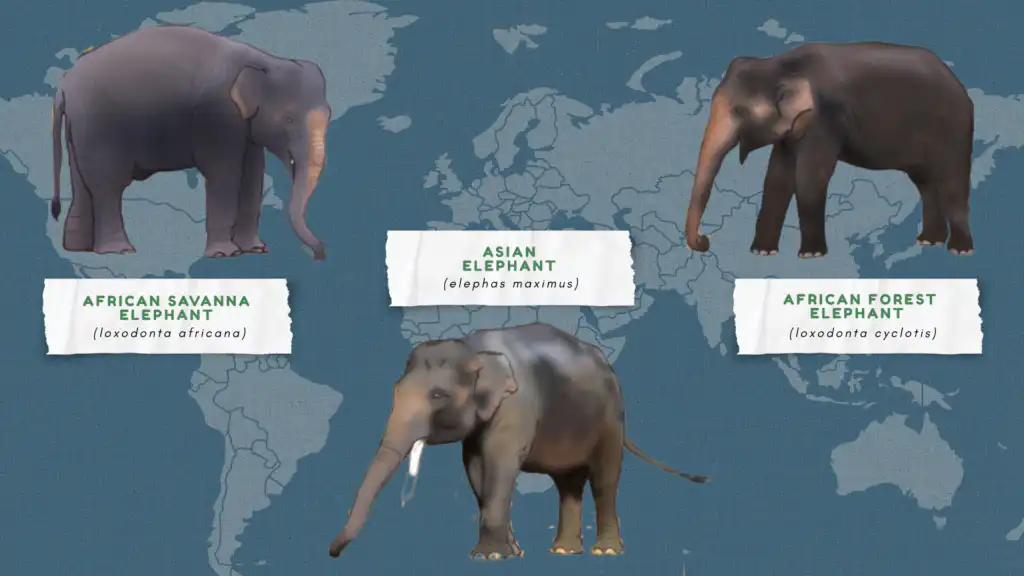
- The best-known are the African savanna elephant (Loxodonta africana) and the African forest elephant (Loxodonta cyclotis). These were only recently distinguished as separate species.
- The third is the Asian elephant (Elephas maximus), which includes subspecies such as the Indian elephant, Sri Lankan elephant, and the Southeast Asian elephant.
Each species has its own adaptations, behaviors, and conservation challenges.
2) Elephants are the largest land mammals
- African elephants can reach heights of ~3 meters at the shoulder and weigh between 4,000 and 7,500 kg.
- Asian elephants are slightly smaller. Males can reach up to 2.7 meters in height and weigh 3,000 to 6,000 kg.
- Their brains are exceptional: among the largest in the mammal world, weighing several kilograms
3) Their trunks are incredibly versatile
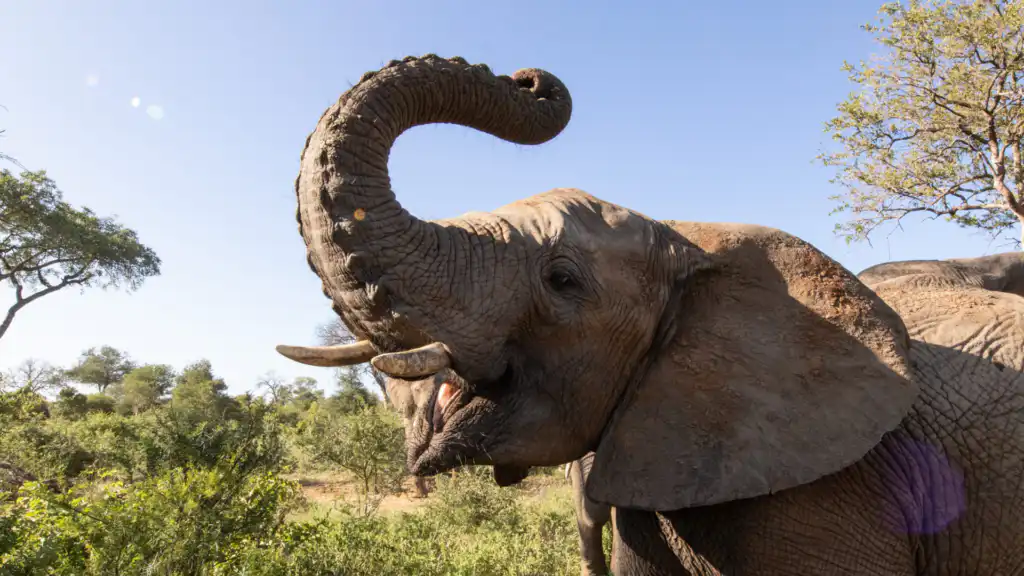
An elephant’s trunk isn’t just a “nose”, it’s a fusion of nose and upper lip, containing ~150,000 muscles (but no bones). They use it to breathe, smell, pick up objects, squirt water, trumpet calls, communicate, and even caress their young. For example, an elephant can suck up water and then spray it into its mouth or over its body to cool down.
4) Elephants eat and drink a lot
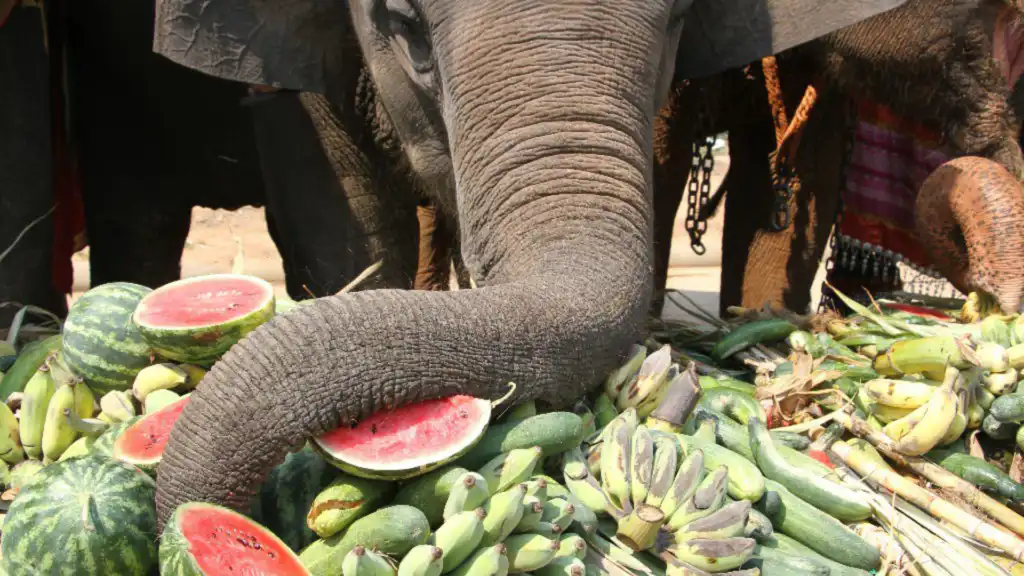
- In the wild, an elephant may spend up to 16 hours a day feeding, consuming hundreds of kilograms of vegetation (some sources put the maximum as high as 600 lbs, though more typical values are ~250–300 lb).
- Water intake is huge: elephants may drink 100 to 200 liters daily (≈ 25–50 US gallons).
- Because they digest food inefficiently, they defecate many times a day (12–15 times), producing large volumes of dung.
5) Elephants have complex social lives and strong bonds
Elephants live in matriarchal herds, often led by an older female, and rely on remarkable memory, complex communication (including infrasound), and deep emotional intelligence to maintain strong social bonds. Many of these behaviors can be observed up close at a rescue park in Thailand, where elephants that once suffered in captivity are free to form natural relationships again.
6) Elephants communicate beyond what our ears detect
Elephants use infrasound (very low-frequency sounds) that can travel many kilometers through the ground or air, allowing communication with distant herds. They also detect seismic vibrations through their feet, sensing distant thunder, footsteps, or herd movements.
7) Only some Asian elephants grow tusks
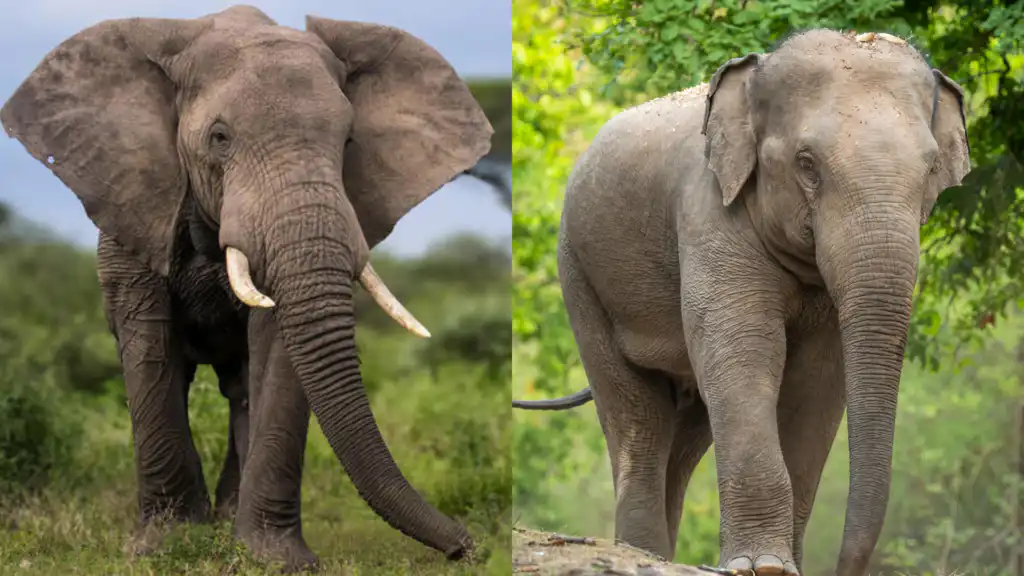
One notable difference between African and Asian elephants: in African species, both males and females have tusks, while in Asian elephants, only some males have visible tusks. Females usually have smaller or no tusks (called “tushes”).
Tusks are actually elongated incisors and continuously grow through life. Elephants use them for digging, stripping bark, lifting, defense, and more.
8) Elephants can live many decades
In the wild, elephants can live for an impressive 60 to 70 years, with some individuals even reaching beyond that age. However, their longevity is often influenced by natural factors such as the gradual wearing down of their teeth, which can make it difficult for older elephants to eat and ultimately limit their survival in later years.
9) Elephants are endangered especially in Asia
- The Asian elephant (Elephas maximus) is classified as Endangered on the IUCN Red List. Estimates suggest there are fewer than ~50,000 wild Asian elephants remaining globally, with declining trends.
- In Southeast Asia and China (including Thailand), the situation is especially critical. Only around 8,000–11,000 wild elephants may remain in those regions.
- In Thailand, elephants are legally protected under national law (e.g. Wildlife Conservation and Protection Act) and under international agreements like CITES.
10) Elephants in Thailand face major challenges
Thailand has a long and complex relationship with elephants, both wild and captive. Wild populations are under severe threat from habitat loss, fragmentation, and rising human-elephant conflict, with only about 3,100 to 3,600 remaining in protected areas. As forests shrink, elephants often raid crops or enter villages, leading to dangerous encounters (over 135 people were killed between 2017 and 2022)
Captive elephants now outnumber those in the wild, with around 2,798 used in tourism. Many suffer from poor conditions, forced performances, and inadequate care, while the controversial “crush” method (phajaan) is still used to tame wild calves. This highlights the urgent need for ethical sanctuaries and every rescue park in Thailand that offers a humane alternative.
11) Elephants Are Losing Their Homes Faster Than Ever
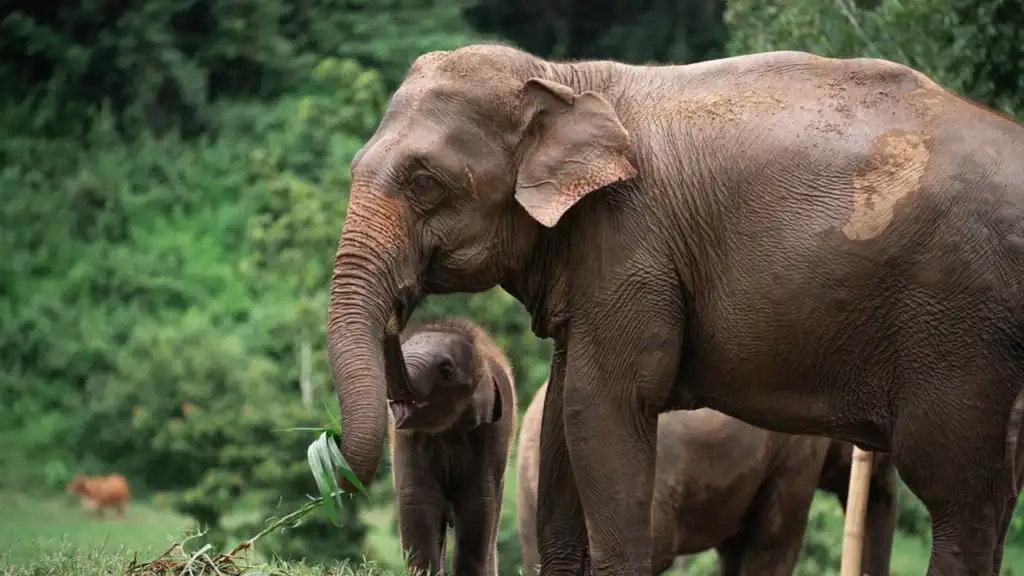
One of the biggest threats to elephants is habitat loss. More than 60% of their historical range in Asia has disappeared over the last century due to agriculture, deforestation, and urban expansion. As their forests shrink, elephants are forced into smaller areas, leading to more than 400 human and 100 elephant deaths every year in Asia from conflict over land and crops. In Thailand alone, over 135 people were killed between 2017 and 2022 during encounters with elephants searching for food. These pressures are so severe that wild Asian elephant populations have plummeted to fewer than 50,000, compared to over 100,000 just a hundred years ago.
12) Poaching and Captivity Still Threaten Their Future
Despite international ivory bans, around 20,000 elephants are still poached each year for their tusks, skin, or body parts. Fragmented populations are now so isolated that they face genetic risks and declining birth rates. Meanwhile, in Thailand, over 2,800 elephants live in captivity, mostly used for tourism activities like rides and performances. Even attempts to control populations through contraceptive programs remain controversial, with unknown long-term effects. These surprising realities show that, while elephants are revered and protected on paper, their survival remains under serious threat.
Conclusion
Elephants are more than just iconic animals; they are keystone species that shape entire ecosystems and hold deep cultural significance in Thailand and beyond. Yet, their future depends on the choices we make today. By choosing ethical experiences, supporting conservation initiatives, and visiting a reputable rescue park in Thailand, each of us can play a part in safeguarding their survival.
