
At an elephant sanctuary Samui, climate adaptation is not a concept for the future. It is a matter of daily routine involving water, shade, space, and timing, and it has become the key indicator of how much any given venue takes care of their elephants. This guide will show you how climate change influences elephants in Southeast Asia, what climate adaptation strategies are implemented by Thai sanctuaries, and how you can support the venues that care about it.
How Is Climate Change Testing Elephant Habitats?
Asian Elephants are extremely sensitive to climate conditions. They require large ranges, reliable sources of water and shade, and increased temperatures or changes in precipitation could exert pressures on each of those.
The statistics look pretty sobering. Research on Asian elephants in Myanmar revealed that the survival rates for the elephants between one month to 17 years were highest at 24 degrees Celsius, while mortality rose as temperature moved from this optimal level (Mumby et al., 2013). According to WildAid (2023), citing the research findings, the risk of dying for calves up to five years nearly doubles on warm days. Elephants cannot sweat except the tips of their trunk, so they utilize enlarged blood vessels, flapping of ears, shade seeking, and swimming or mud baths to cool off. According to WildAid (2023), heat stroke is one of the major leading causes of death among Asian elephants in Myanmar.
Why Do Heat and Drought Bite Elephants Hardest?
Elephants cool down by wallowing, bathing and standing in shade, and a full-grown elephant can drink around 190 litres of water or more a day, making reliable water access especially important as temperatures rise (WildAid, 2023).
When landscapes heat up:
- Water sources dry earlier in the dry season, concentrating elephants around shrinking pools
- Forest cover thins, removing both shade and food corridors
- Human-elephant conflict can rise as elephants range further in search of food and water (International Union for Conservation of Nature [IUCN], 2021)
- Calf survival can be affected because water scarcity may contribute to insufficient milk production and dehydration (WildAid, 2023)
Climate stress does not just make elephants uncomfortable. It removes resources their survival and social structure depend on, and its effects are particularly serious where habitat is already fragmented (IUCN, 2021).
Adaptation Strategy 1: How Do Sanctuaries Build Water Security?
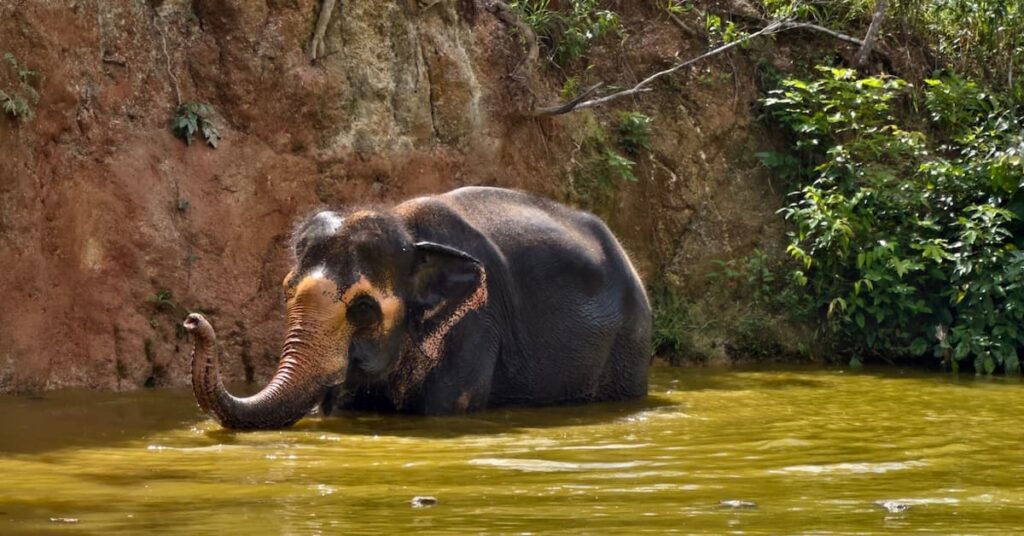
The most direct adaptation is engineered water:
- Waterholes deepened and shaded to retain water through the dry season
- Catching rainwater from rooftops and run-off water to store for the hot season
- Solar pumps that maintain watering points without diesel-powered generators
- Seasonal monitoring that informs managers about when supplemental watering is needed
How Does an Elephant Sanctuary Samui Manage Water?
Reliable access to water needs to be considered throughout the year rather than only when the dry season arrives. Samui Elephant Haven, for example, incorporates natural lakes and man-made pools into its sanctuary environment. In an island setting where rainfall and water availability vary seasonally, planning ahead for water access is an important part of responsible elephant care.
Adaptation Strategy 2: Why Does Habitat Connectivity Matter?
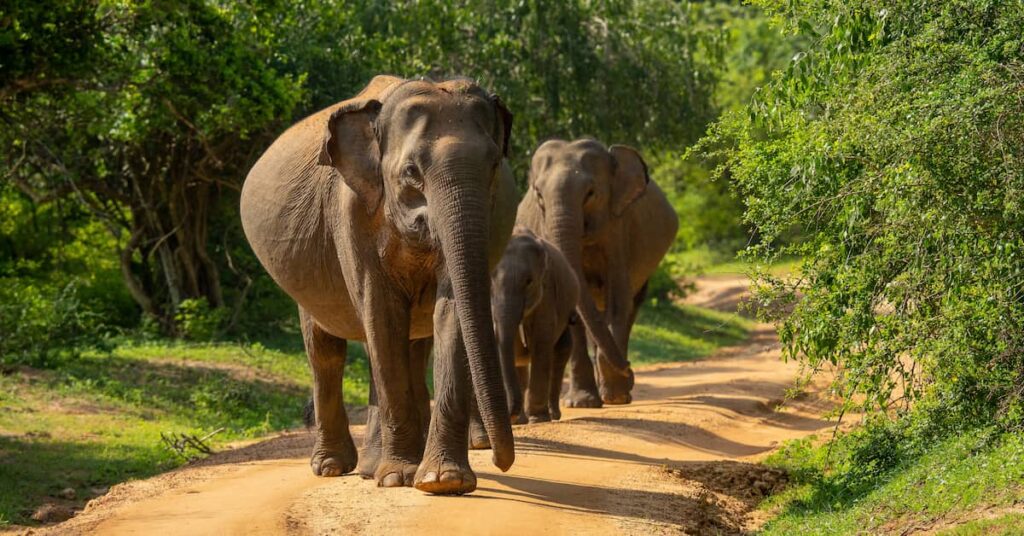
It is difficult for elephants to cope in isolated habitats due to their inability to adapt to new circumstances in a fragmented environment. Among the most efficient strategies is the connection method, which implies that there should be protected habitat routes to allow herds to move to other places, especially to get water and feed in case of changed conditions.
Workable methods include:
- GPS collar based corridor mapping
- Annual communities’ agreement about keeping corridors open year after year
- Planting buffer corridors by fast-growing shade plants along the route perimeter
Additionally, such a way of protecting elephants allows giving them something not even a fence can do – choice. Being able to move around and select new territories helps elephants deal with food and water changes. That is why it is so important to maintain habitat connectivity and secure corridors for them according to the IUCN SSC Asian Elephant Specialist Group (n.d.).
Connected habitat is a climate-resilient habitat, where in case of bad conditions on one territory it will be easy to get to another place.
Adaptation Strategy 3: What Is Heat-Smart Husbandry?
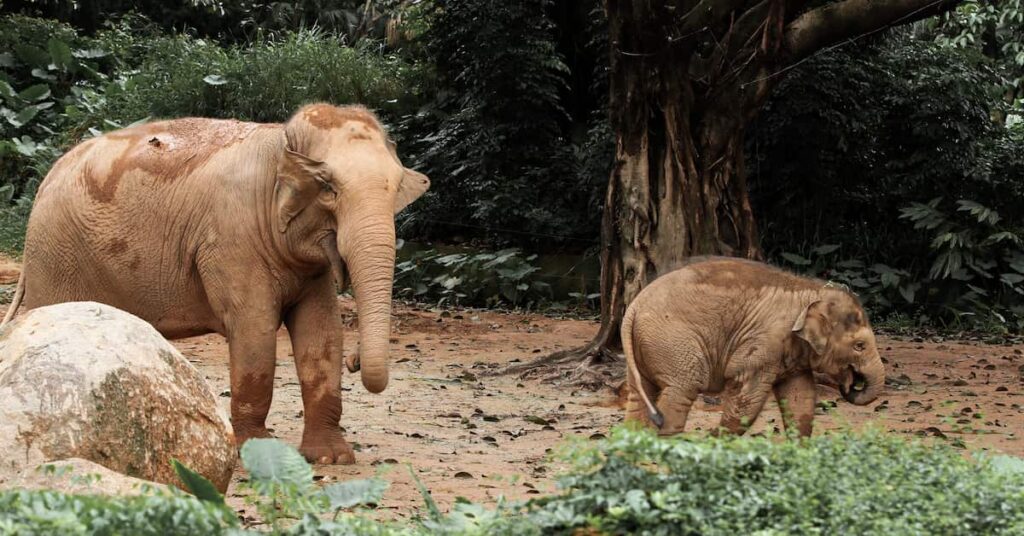
In managed settings, adaptation means daily practice:
- Shade construction and planting trees in pastures and rest areas
- Activity times in the morning and evening to avoid the hottest parts of the day
- Constant mud wallows and pools all year-round, not just during the rainy season
- Dietary management with high moisture forage during hot periods and supplementation if forage quality drops
These activities seem straightforward, but they accumulate. A sanctuary that switches pastures helps to maintain healthy forage; one that plans walks during the hot times avoids peak heat; one that monitors water consumption is able to detect shortage problems.
At an ethical elephant sanctuary, you can see these principles working through cooler activity periods, access to water and adequate shade.
Which Adaptation Measures Deliver the Most?
| Measure | Cost | Impact | Easiest first step |
| Shade planting | Low | High | Plant native trees |
| Waterhole deepening | Medium | High | Survey dry-season levels |
| Solar pumping | Medium | Medium-high | Assess existing pump systems |
| Activity rescheduling | Low | High | Shift activities away from peak heat |
| Corridor agreements | High | High | Map elephant movements |
Adaptation Strategy 4: How Do Communities and Landscapes Build Resilience?
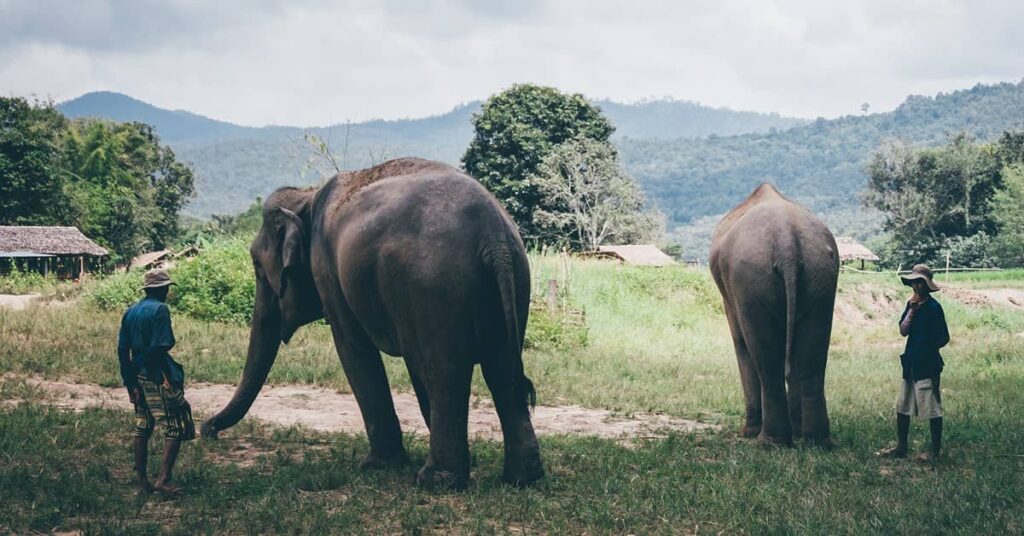
Conservation increasingly connects elephants with wider community and landscape planning:
- Early warning systems for crop raiding during drought years
- Compensation and insurance schemes aimed at increasing tolerance of elephants
- Reforestation using native plants that could support habitat and food availability
- Eco-tourism revenue that could provide economic reason for protecting habitats
If adaptation is community-led, then it will have a better chance of surviving both droughts and rainy seasons. Landscape-scale elephant conservation involves linking habitat protection with agriculture, water, land-use planning, and human-elephant conflict instead of wildlife management being seen as an isolated matter (IUCN, 2021; IUCN SSC Asian Elephant Specialist Group, n.d.). For the bigger picture of how sanctuaries fit into conservation outside of climate change efforts, read our blog on the role of elephant sanctuaries in conservation.
How Can Visitors Support Climate-Resilient Sanctuaries?
Climate adaptation is a test you can perform on any venue before booking it. Venues which adapt well will be those which view welfare as infrastructure, not marketing:
- Invest visibly in water and shade infrastructure
- Offer no-ride, observation-first experiences
- Plant and conserve vegetation in conjunction with elephant care
- Respond directly when asked about dry season management
These are the same indicators you would see in any ethical elephant sanctuary in Thailand. Want to test a venue before visiting? Check out our blog on how to identify ethical wildlife parks and sanctuaries.
What Makes an Ethical Elephant Sanctuary in Thailand Climate-Ready?
But there is more beyond just the checklist. Look for transparency in the form of clear welfare policies, easily observable water and shady spots, and routines that adapt to the seasonal conditions. A venue where the dry season is treated as a planning problem is a venue which takes climate adaptation seriously. Visitors can identify the indicators of the above at an ethical elephant sanctuary Samui.
What Can Visitors Do to Help Elephants Adapt?
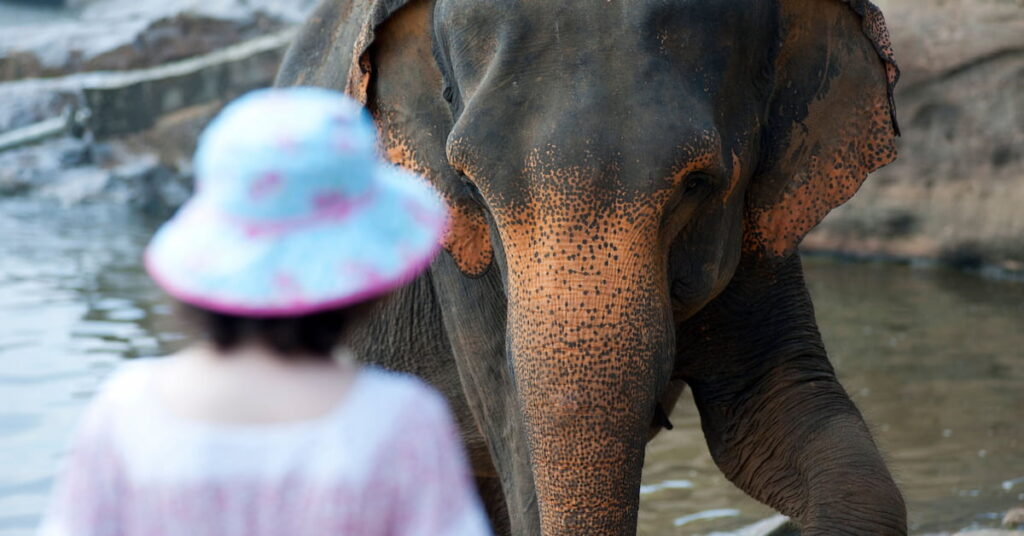
The single most leveraged action is picking out venues that make it obvious they are investing in water and shade, and then asking a single question on arriving: “How do you deal with the dry season?” A venue that can answer with specific practices gives visitors a clearer picture of how seasonal conditions are managed.
Three minor habits add leverage. If possible, book morning or late afternoon slots, which can decrease exposure to daytime heat. Avoid add-ons that involve riding or unwanted contact, opting for observation experiences instead. If the venue has published their work in water, habitat, or reforestation, share it because visitor demands could reward responsible practices.
Geography plays a role too because island sanctuaries have their own seasonal water and habitat challenges, meaning conditions change from venue to venue. A Koh Phangan elephant sanctuary, for example, can be assessed using the same questions about water, shade and seasonal care. If you are planning a visit, you can also explore some of the top ethical and eco-friendly places to visit in Koh Samui and apply the same responsible-tourism principles when comparing your options.
And when you book an elephant tour on Koh Samui, treat the tour itself as part of the adaptation story. Choosing programmes scheduled outside the hottest parts of the day can reduce exposure to peak temperatures and support heat-conscious care.
Conclusion
Climate adaptation for elephants is an immediate challenge, not one that lies far in the future. It is a series of choices regarding water, shade, space, and community, and the sanctuaries that take those choices seriously will be in a much better position to care for their elephants as climate changes continue. One of the factors in the equation is visitors; money spent at a sanctuary that makes provision for water and shade can help in caring for its elephants.
At Samui Elephant Haven, access to space, water, shade and appropriate daily care forms part of responsible elephant welfare. When you choose where to spend your visit, look for an elephant sanctuary Samui that can explain how it manages changing seasonal conditions, not just show you its brochure.
Frequently Asked Questions
Sources
- International Union for Conservation of Nature. (2021, August 12). Shrinking spaces for the world’s largest land animal. IUCN.
- IUCN SSC Asian Elephant Specialist Group. (n.d.). IUCN SSC Asian Elephant Specialist Group. International Union for Conservation of Nature.
- Mumby, H. S., Courtiol, A., Mar, K. U., & Lummaa, V. (2013). Climatic variation and age-specific survival in Asian elephants from Myanmar. Ecology, 94(5), 1131–1141. https://doi.org/10.1890/12-0834.1
- WildAid. (2023, April 22). 5 ways climate change is affecting elephants and 1 surprising way they help fight it. WildAid.
