
Selecting an ethical elephant sanctuary Samui that tourists can trust begins with one simple question: does the sanctuary allow you to ride? This will give you an idea of what experience the place is providing, from the way they live their days to the activities they offer to tourists.
This guide will explain the no-ride policy at Samui Elephant Haven based on the sanctuary’s way of doing things: why they don’t allow riding, why they don’t allow tourists to bathe the elephants either, how their individual rescue stories affect the tour, and what to check before booking.
What Does “No Riding” Actually Mean at an Elephant Sanctuary Samui Visitors Can Trust?
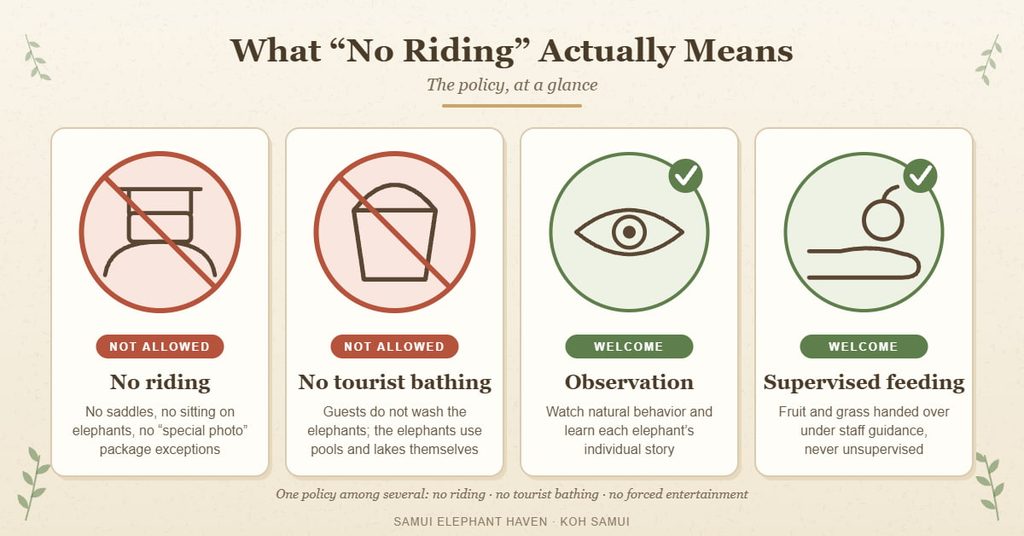
At an elephant sanctuary Samui visitors can trust, no riding means that visitors do not mount, ride, or even sit on the elephants. At Samui Elephant Haven, it is just one among a series of other policies that also prohibit tourist bathing and forced entertainment. Thus, no riding is not sufficient to describe the whole policy of the venue.
No riding. Elephants are not ridden, regardless of the method of riding (for instance, by saddling the elephants or for a brief photograph). A “special photo package” cannot be an exception to the policy of no riding.
No forced entertainment. Forced entertainment of visitors is not allowed at the Samui Elephant Haven. Visitors should be engaged in activities that help them learn more about the elephants rather than making the animals demonstrate tricks.
Visitor observation and feeding under supervision. No riding does not necessarily mean complete avoidance of hands-on interaction with the elephants. Feeding of visitors at the haven takes place, so you should understand the contact involved before booking.
Information about animal management. You should inquire how interactions are supervised, how the elephants are restrained, where they spend their nights, and what happens when an elephant does not approach. Questions about restraint, overnight arrangements and exceptional handling circumstances deserve specific answers rather than assumptions based on a sanctuary’s name.
| What to check | What clear information should explain | What needs clarification |
|---|---|---|
| Riding and mounted photographs | Whether all visitor riding and sitting on elephants are excluded | Exceptions for photographs or private packages |
| Entertainment | Whether elephants are required to perform for guests | Tricks described as demonstrations or enrichment |
| Visitor bathing | Whether guests enter the water to wash elephants | Bathing offered despite a stated no-bathing policy |
| Feeding and touching | What contact is allowed and how staff supervise it | Unrestricted contact or unclear instructions |
| Animal management | How elephants are managed during and outside visits | Broad promises without details |
| Prices and inclusions | The exact program, duration, transport and meal arrangements | A headline price with unspecified extras |
These checks help you assess the actual visit without treating one activity or marketing phrase as proof of every aspect of welfare.
Why Did Sanctuaries Move Away from Elephant Riding?
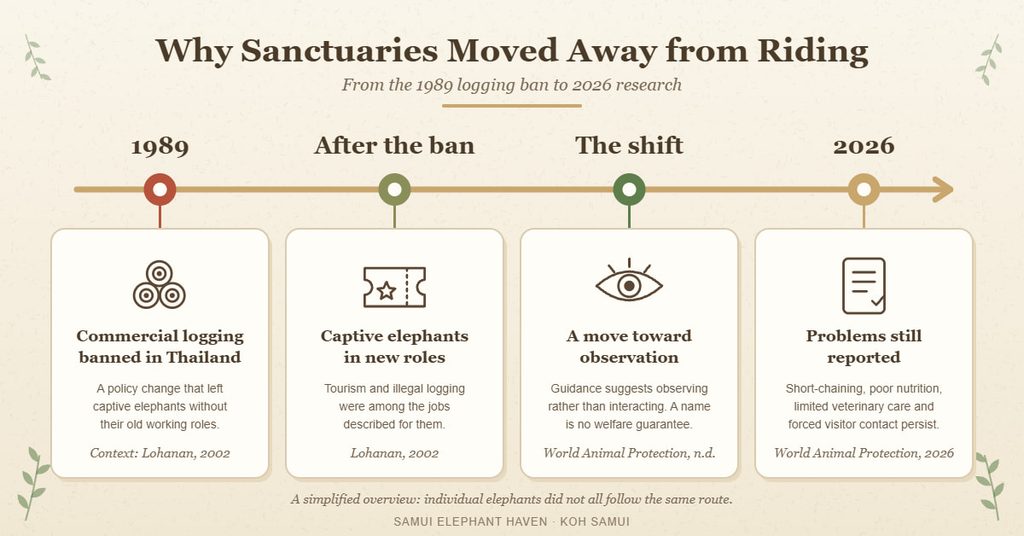
The trend away from riding is due to issues surrounding the training, restraint, and activities of tourists. The Elephant Friendly Tourist Guide, published by World Animal Protection, suggests observing rather than interacting and indicates that the name alone is not a guarantee of good welfare standards (World Animal Protection, n.d.).
In its 2026 research on elephant welfare, the organization highlights that problems such as short-chaining, poor nutrition, lack of veterinary treatment, and forced contact with visitors persist (World Animal Protection, 2026). While ride removal deals with one problematic activity, an evaluation should also consider the conditions in which elephants spend the rest of their day. One historical factor worth mentioning is the 1989 ban on commercial logging in Thailand.
According to a paper published by the Food and Agriculture Organization, Roger Lohanan analyzes unemployment in the wake of this policy as well as the various jobs for which captive elephants were used, including tourism and illegal logging (Lohanan, 2002). Nonetheless, there are variations between individual stories, and not every elephant followed the same route.
In Samui Elephant Haven, these differences are apparent in the elephant profiles of the sanctuary. In the case of Sorn Ram, her work history involves working in logging, whereas for Aom it involves early performance training. Learning these histories means gaining a more specific insight into the elephants that one will encounter.
No-riding policy alters what tourism asks of an elephant, instead of taking a person for a ride, the animal becomes the subject of observation and education. This should be evident in the activities offered at the elephant sanctuary Samui that is visited.
The value of an ethical elephant sanctuary Thailand offers lies in having the practices explained clearly. No-riding is an important starting point, followed by queries regarding contact, day-to-day care and the rest of the visitor program.
Why Does the No-Bathing Rule Matter Alongside No Riding?
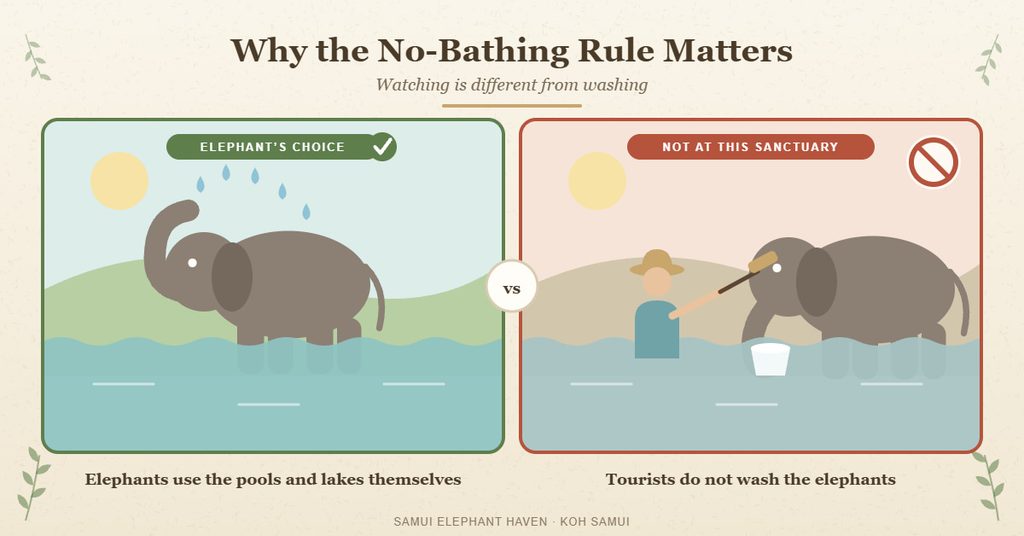
A ban on elephant riding does not exclude bathing for tourists either. Samui Elephant Haven does not allow riding or tourist bathing, along with forced entertainment. Tourists are able to study elephants just by watching and through the activities that are involved in the program that they have chosen.
It should be emphasized that watching how elephants wash themselves in water and mud is different from tourists’ washing elephants in these areas. Thus, there is a ban on bathing of elephants by tourists at Haven, but elephants themselves are able to use the sanctuary’s pools and lakes.
According to World Animal Protection, tourists are advised to observe elephants rather than participate in bathing or other activities which require contacting the animals (World Animal Protection, n.d.). During an elephant sanctuary Samui visit, watching elephants use their surroundings offers an opportunity to learn about their behavior without participating in a washing activity.
How Do Rescued Elephants Recover After Difficult Working Lives?
Recovery is influenced by each elephant’s own background and needs. They can require continued treatments, changes in diet, or changes to their surroundings ; meeting tourists is no sign of recovery at all. The Elephant Care Manual for Mahouts and Camp Managers stresses the importance of observing each animal and getting its veterinary help if it is ill (Phuangkum et al., 2005).
Space and appropriate surroundings
According to Samui Elephant Haven, its sanctuary is made up of some 60 rai of hills and jungle in northern Koh Samui, complete with natural lakes and pools, along with secure enclosures for recovery, calf, rest and social needs.
Enclosures do not necessarily contradict the care of a sanctuary. What is important is the purpose and use of the enclosures, especially when the animals require rest, separation or a managed environment.
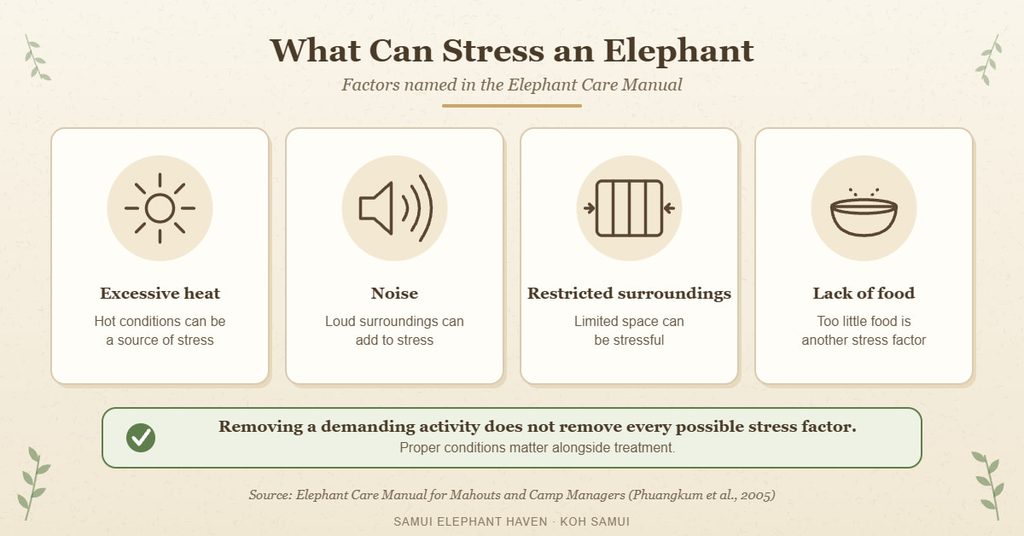
In the care manual, excessive heat, noise, restricted surroundings and lack of food are just some possible causes of stress. This highlights the importance of proper conditions alongside treatment, as removing a demanding activity doesn’t remove all possible stress factors (Phuangkum et al., 2005).
Individual histories
Knowledge of an elephant’s history helps its keepers to understand any changes in its state. The guide notes that it is important to take into consideration eating, drinking, sleeping and recent work while assessing a sick elephant. At the same time, the observations of a familiar keeper are helpful for treatment of elephants (Phuangkum et al., 2005).
This type of information can become a basis for questions for the guide: What is known about the history of the elephant; what kind of care is needed for this elephant now; and how does the history of the elephant affect its daily routine? Don’t suppose that all the rescued elephants have identical wounds and behave in one way.
Respectful visitor contact
A close encounter is not a measure of recovery. Guests are recommended to comply with the rules and instructions of the staff members, realize that not all the elephants can be visited, and avoid expecting that the animal will come near for a picture.
An elephant sanctuary Samui experience can be rewarding even through ordinary moments: observing feeding, noticing how an elephant uses its surroundings, and understanding the reasons for individual care for the animal. There is no need for a staged demonstration to make those moments meaningful.
How Can You Assess a Sanctuary Before You Book?
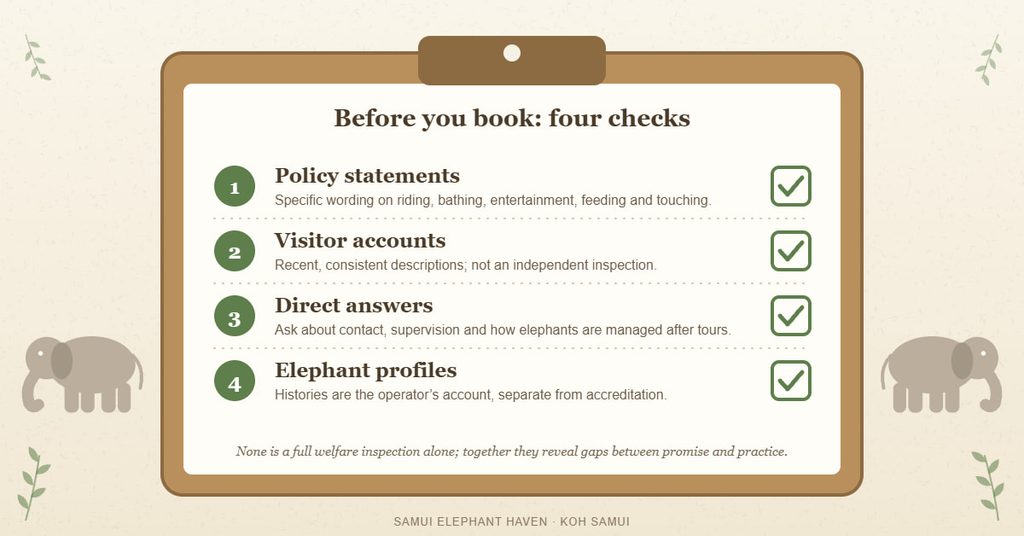
Before opting for any elephant sanctuary Samui experience, ensure you know four aspects: policy statements at the venue, visitor accounts, direct responses to your queries, and details on the elephants being cared for at the facility. None gives a whole welfare inspection by itself, but together, they will assist you in spotting any disparity between the experience advertised and the actual activities provided.
Start with the language used. You should find specific statements regarding riding, bathing, entertainment, feeding, and touching. Terms like “ethical,” “rescue,” and “sanctuary” need some more details on their practice.
Read some recent visitor accounts. They can provide you with insights on what the visitors have experienced, but they do not give an independent welfare inspection. You should focus more on consistent descriptions of the activities, supervision, and booking process rather than relying only on star ratings.
Ask booking-related questions. Is it possible for visitors to ride or even sit on the elephants? Is there any provision for tourist bathing? What kind of interaction is allowed? How are the elephants managed after the tour hours? Ask further if the information is not provided on the website.
Look at the stories of the elephants. The individual profiles might be able to tell the origin of the animals as well as what is known about their lives. This should be treated as the stories told by the operator, separate from independent evidence or accreditation.
This information will be helpful whether you’re looking for the best elephant sanctuary in Thailand or the best elephant sanctuary Koh Samui offers. A list is less helpful than understanding the workings of the visit itself.
What Does a No-Riding Visit Involve from Arrival to Departure?
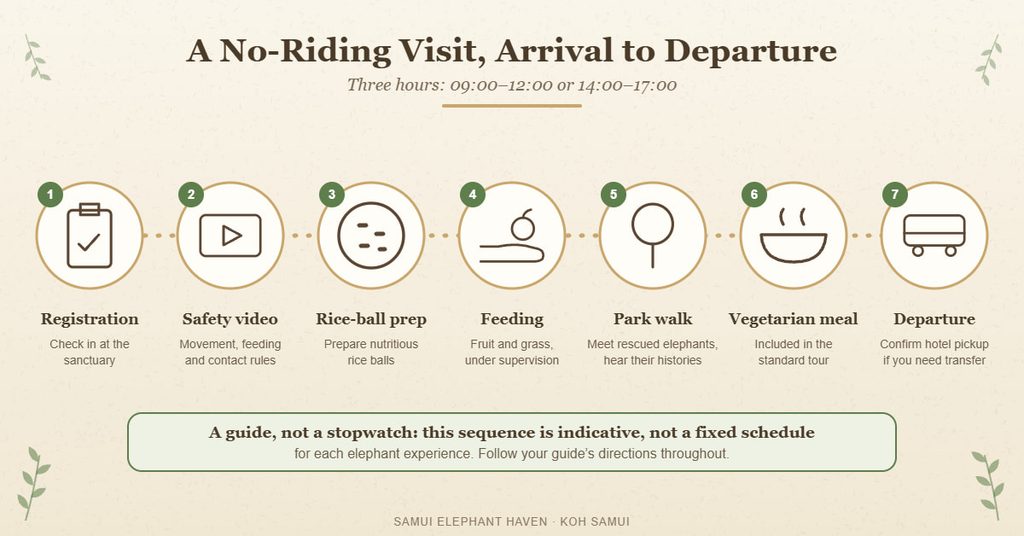
Three hours are provided for each of the Samui Elephant Haven visits, both in the morning and the afternoon. Activities involved in this particular visit to elephant sanctuary Samui include the following: safety briefing, feeding, rice ball making, park walk and vegetarian meal. However, the above mentioned sequence is only a guideline and does not imply a specific time schedule for each elephant experience.
Arrival and introduction
Visit starts with registration and watching a video safety briefing introducing the sanctuary. Pay attention to all instructions given by the guide about movement, feeding and contact with elephants. Follow the guide’s directions throughout the visit.
Do not mistake one isolated action like flapping ears or a curling trunk as a signal that it’s OK to come near the elephant.
Food preparation and feeding
The participants will learn how to prepare nutritious rice balls and feed the elephants fruits and grass under supervision. Please use the food and method of feeding that is supplied by the guides rather than bringing treats without approval.
Walking and learning
The tour entails walking in the park and getting to meet rescued elephants and knowing the history behind them. The guide will talk about the behavior of the Asian elephants and the various stages of life for different animals.
Vegetarian meal and departure
The vegetarian lunch is included at the end of the standard tour. Please inform us about your dietary restrictions while booking and confirm pickup arrangements if you need hotel transport.
The published options are:
| Program | Duration and session times | Price | Hotel transfer |
|---|---|---|---|
| Tour Program | Three hours: 09:00–12:00 or 14:00–17:00 | Adults THB 3,000; children aged 4–11 THB 1,500; under 4 free | Round trip included |
| Feeding Program | Approximately 45–60 minutes; sessions at 10:00, 11:00, 13:00, 15:00 and 16:00 | Adults THB 1,000; children aged 4–11 THB 500; under 4 free | Not included |
| Full-Day Volunteer Program | 09:00–16:00 | THB 6,500 per participant | Round trip included |
The Full Day Volunteer Program can only take a maximum of six individuals daily. The program comprises activities like food preparation, scheduled cleaning tasks, and optional gardening or enrichment activities, with some activities weather- and health-dependent.
No matter which elephant tour Koh Samui visitors choose, make a comparison of the actual programs offered as opposed to the generic price range for the island. Confirm current prices, availability and inclusions through the official tour program information.
How Does Samui Elephant Haven Turn the Policy into Daily Practice?
Samui Elephant Haven links its policies of “no-ride, no-bath and no-forced entertainment” to specific visitor programs. The shorter Feeding Program and the more extended volunteer experience involve people differently, allowing visitors to pick how much time they wish to dedicate to learning about the sanctuary.
Moreover, the volunteer experience includes practical tasks such as preparing food and assisting in cleaning. These will provide the participant with a new point of view compared with a short visit, without the promise of any encounter with the animal.
Finding an ethical elephant sanctuary Thailand is all about seeking out these details. Make sure to ask about the specific program that you will participate in and differentiate between the commitments made by the sanctuary and assumptions about how every animal is managed.
Samui Elephant Haven’s sanctuary information and elephant profiles explain its setting and policies in more detail. Any questions regarding overnight restraint, session sizes beyond the volunteer experience or individual handling arrangements can be addressed to the sanctuary’s team.
Is a No-Riding Visit Worth It for Families with Kids?
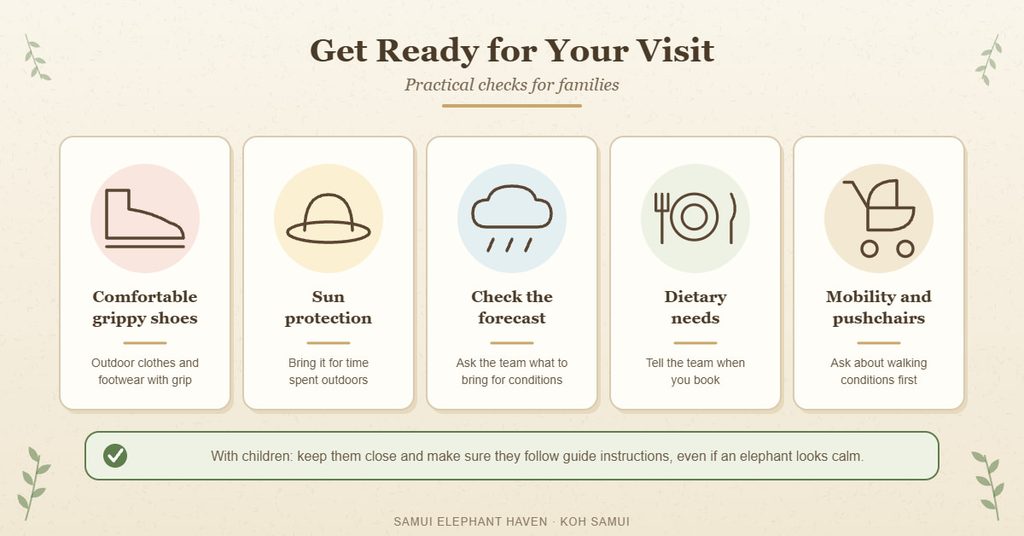
The non-riding visit is appropriate for families provided the program fits their interests and practical needs. Let them know upfront that the children won’t ride or bathe the elephants, that feeding follows staff instructions and that just because they see an animal doesn’t mean they’ll be able to touch it.
If you’re dealing with young children, ask yourself whether a shorter feeding visit is better than a three-hour tour. For other families, the longer program including a walk, food preparation and meal is more attractive. There is no single age at which every child will enjoy the same experience.
Ask about walking conditions, pushchairs, mobility needs and dietary needs before you make your reservation. Keep children close during the visit and make sure they understand that even if the elephant looks calm, instructions are mandatory.
When parents compare the best elephant sanctuary Koh Samui has for their family, they should focus on proper supervision and practical arrangements. A good family experience requires knowledge about the animals and proper engagement instead of continuous interaction.
Prior to an elephant sanctuary Samui trip, you should wear comfortable outdoor clothes and footwear with grip. Bring sun protection, check the forecast and ask the team what to bring for the conditions. In case of bad weather, confirm the arrangements for your booking rather than assuming rain gear, refunds or rescheduling are included.
How Can You Arrange an Elephant Tour Koh Samui Visitors Can Book Directly?
Contact our team about the chosen date, group size, children’s ages, transportation needs, and any dietary or mobility requirements so we can explain the available options.
Samui Elephant Haven
137/31 Moo 1, Bophut, Koh Samui, Suratthani 84320, Thailand
Tel: +66 95 628 6160
Email: [email protected]
Contact Samui Elephant Haven to arrange your visit.
According to the official page for the tour, cash payments are required upon arrival, and advance bank transfers are discouraged. Please check the current instructions directly when arranging your booking.
Conclusion
At the Samui Elephant Haven, we believe that a worthwhile trip will result in gaining some knowledge about the animals kept at the sanctuary. Opting for an elephant sanctuary Samui experience will provide you with an opportunity to look past the tourist shots and know more about individual lives. We hope you will leave us with questions in mind, a deeper appreciation of elephants and memories built around learning.
Frequently Asked Questions
Are elephant sanctuaries in Koh Samui actually ethical?
Various practices are followed at different places, so it is better to analyze the activities and policies rather than trust the name of the sanctuary itself. Read current program details, ask about visitor contact and look for independent welfare information. Reviews can describe the experience of a guest, but they do not verify every aspect of animal care.
Can you still touch elephants during a no-riding visit?
A no-riding policy does not automatically prohibit all contact. Samui Elephant Haven’s advertised programs include supervised feeding, so ask what contact is permitted, and whether you can observe without participating. Follow the guide’s directions and do not presume that the elephant’s proximity means it is okay to touch.
Which is the best elephant sanctuary in Thailand?
There is no single answer for every traveler. Compare published policies, visitor contact, independent evidence, and practical suitability. Determine the factors which are most important to you and distinguish between the organization’s portrayal of their operations and independent assessment. Avoid treating an unattributed ranking as a welfare guarantee.
Are morning or afternoon sessions better?
Select the time that best suits your travel plan and the needs of your group. There is no guarantee of livelier elephants, better pictures or fewer visitors at either of these times. If heat, transport or crowding affects your decision, ask the team for information on conditions and availability on the day you plan to visit.
Does an elephant sanctuary Samui visit continue in rain?
Contact the establishment for information on how this will be handled on your particular booking. Weather can affect your outdoor activities and access, so request guidance if heavy rain or storms are forecast. Confirm cancellation and rescheduling terms in advance rather than assuming that every operator follows the same policy.
References
- Lohanan, R. (2002). The elephant situation in Thailand and a plea for co-operation. In I. Baker & M. Kashio (Eds.), Giants on our hands: Proceedings of the International Workshop on the Domesticated Asian Elephant. Food and Agriculture Organization of the United Nations.
- Phuangkum, P., Lair, R. C., & Angkawanith, T. (2005). Elephant care manual for mahouts and camp managers (RAP Publication 2005/10). Food and Agriculture Organization of the United Nations & Forest Industry Organization.
- World Animal Protection. (2026, January 12). Captive elephants still suffering in Thailand, but new report finds some hope.
