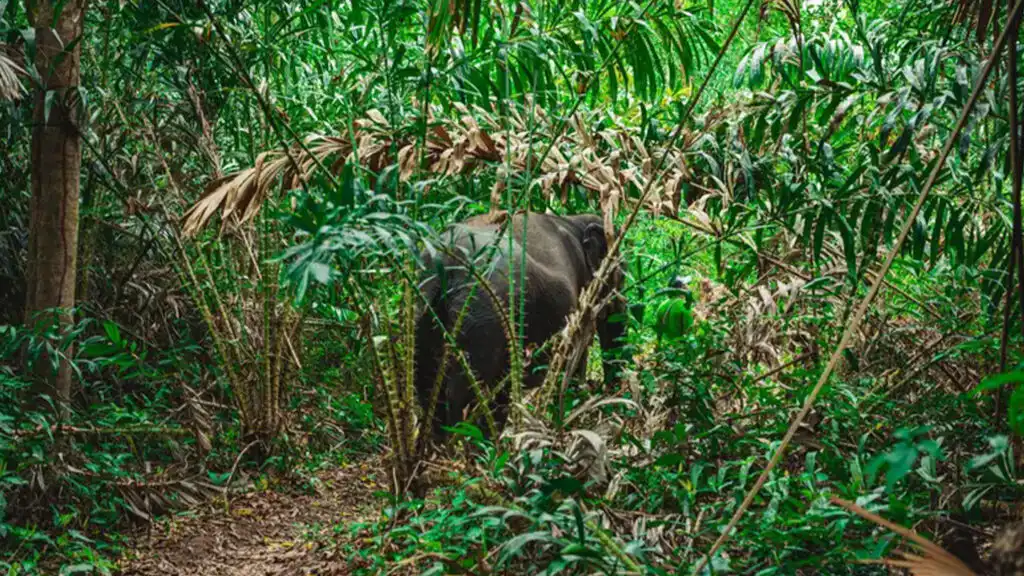
Elephants and forests have evolved together in ways that make their survival inseparable. Forests give elephants the essentials: water, shade, and a varied plant diet of leaves, bark, fruits, and grasses. In return, elephants act as “ecosystem engineers,” reshaping vegetation, dispersing seeds, and creating the gaps and trails that keep tropical forests dynamic. Researchers describe them as “megagardeners of the forest,” capable of transporting seeds over long distances and stimulating germination through digestion.
A 2023 ecological study estimated that a single Asian elephant in Southeast Asia can damage or remove 39,000–73,000 saplings per year, depending on habitat type. This selective feeding keeps forests from becoming over-dense, opens the canopy, and allows a wider diversity of species to thrive. In mature forests, elephants prefer palms and other monocots, while in younger forests, they browse heavily on saplings. By filtering which plants dominate, elephants indirectly shape forest structure, carbon storage, and future regeneration.
What This Looks Like in Thailand
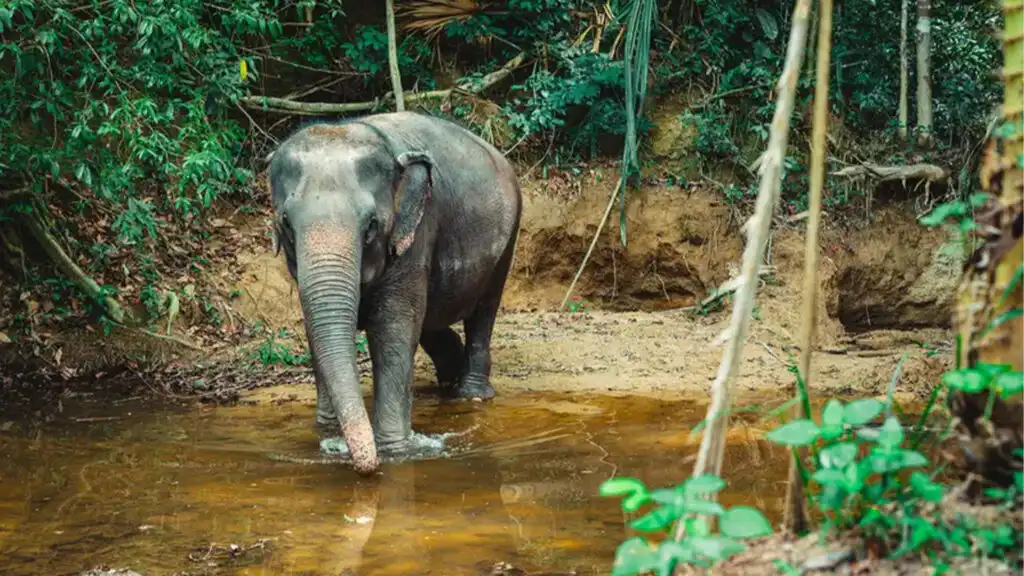
Thailand’s remaining wild elephants roam landscapes like the Kaeng Krachan National Park, the Western Forest Complex, and the Dawna Tenasserim region. These areas are part of WWF-led corridor initiatives designed to reconnect fragmented forests. Without such corridors, elephants face isolated ranges, reduced genetic diversity, and greater conflict with farming communities.
Thailand currently reports about 24% of its territory under conservation management, but to meet the global 30×30 target, the country is expanding the use of Other Effective Area-Based Conservation Measures (OECMs). Unlike strict national parks, OECMs can include community forests, buffer zones, and even lands around sanctuaries where conservation goals are balanced with human use. For elephants, this means more space to move safely across the landscape.
How Ethical Sanctuaries Keep the Bond Alive
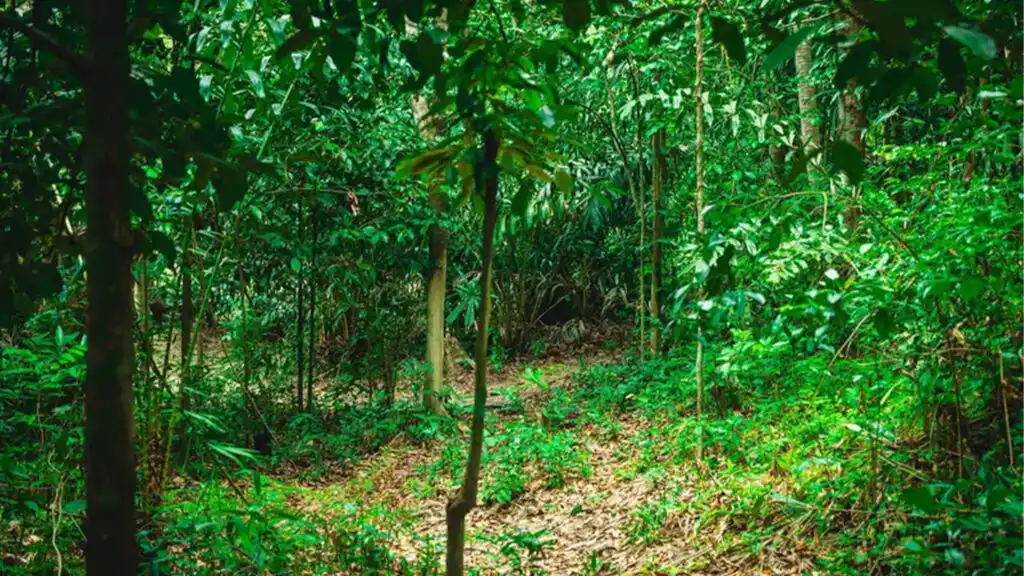
Not every elephant in Thailand can live in the wild. Centuries of captivity, logging history, and tourism demand have left thousands of elephants dependent on human care. This is where sanctuaries step in. The best sanctuaries provide elephants with natural forested environments, allow them to forage freely, and eliminate exploitative practices such as riding, shows, or forced interactions.
Thailand’s elephant management laws trace back to the Wild Elephant Protection Act of 1921, and while progress has been made, welfare standards for captive elephants are still developing. A 2021 review of Thai elephant management urged stronger legal protections and evidence-based welfare guidelines.
Ethical sanctuaries in Thailand respond to this by focusing on observation-based tourism. Visitors can watch elephants behave naturally, often in reforested or semi-wild habitats, without disturbing them. Sanctuaries also take part in reforestation projects, restoring degraded areas into elephant-accessible landscapes that reconnect with wild forests.
How Visitors Can Help
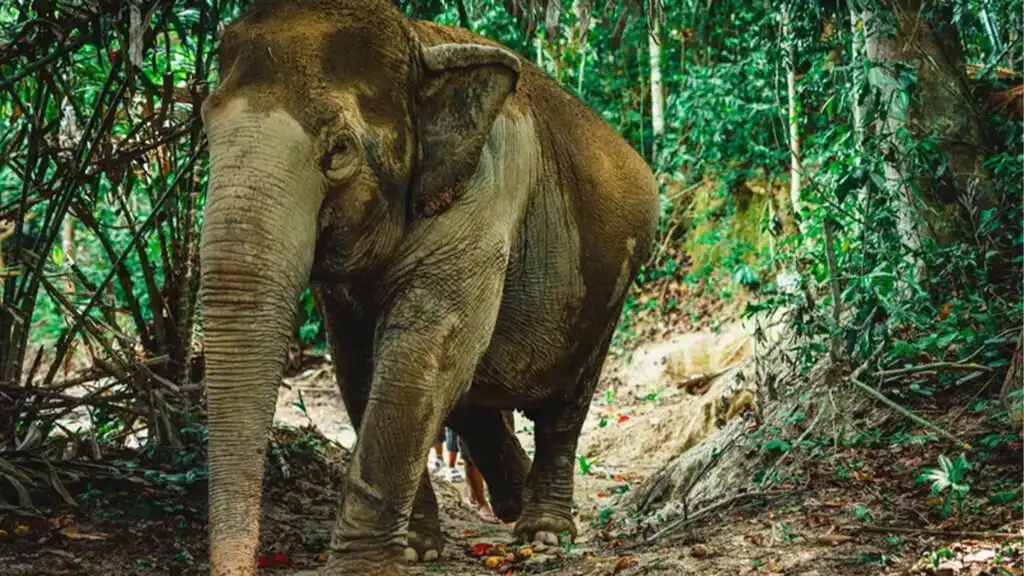
Tourists play a direct role in supporting this bond between elephants and forests. Choosing where to visit matters. Look for sanctuaries that:
- Provide elephants with access to natural forest habitat.
- Do not allow riding, tricks, or forced bathing.
- Support reforestation and corridor projects.
- Educate visitors on elephant ecology and conservation.
- Are transparent about their funding and partnerships with conservation groups.
By supporting these sanctuaries, visitors contribute to a model where elephants live in dignity, forests regenerate, and local communities benefit.
The Bigger Picture
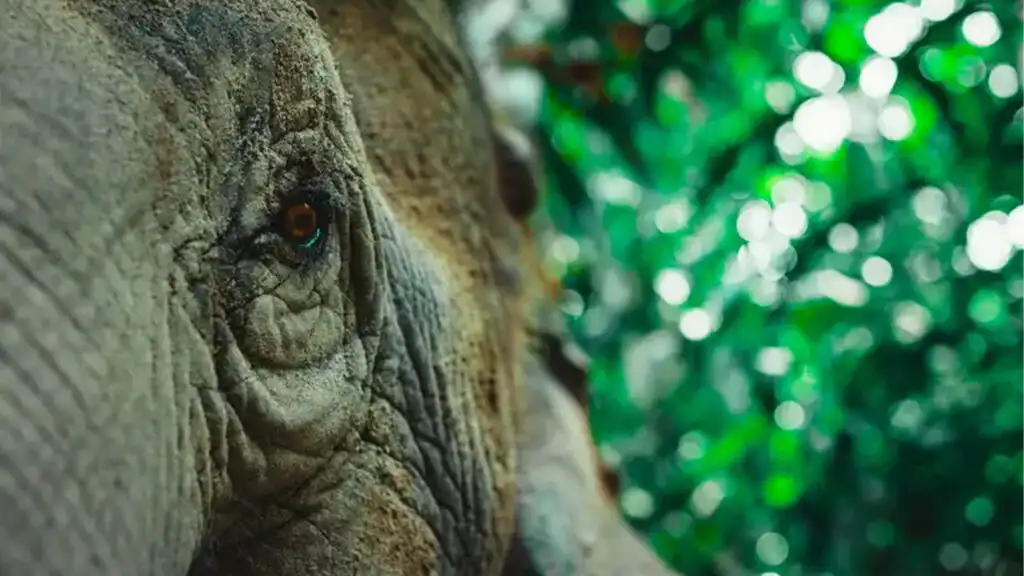
Elephants are more than charismatic giants; they are living architects of Asia’s forests. In Thailand, where wild herds still roam and sanctuaries care for rescued elephants, protecting this bond has global importance. Climate change, deforestation, and fragmentation remain threats, but solutions are in motion: reforestation programs, wildlife corridors, OECMs, and ethical sanctuaries.
At Samui Elephant Haven, we carry this mission forward every day by giving rescued elephants the chance to roam freely in a natural forested environment. As an elephant sanctuary Samui, we focus on ethical care, reforestation, and education, ensuring visitors witness elephants behaving as they should. Together with our sister project, the Phangan Elephant Sanctuary, we are part of a growing movement in Thailand that protects elephants, restores forests, and inspires people to support a future where these giants and their forest homes thrive side by side.