
For an elephant that has spent years carrying tourists, performing in shows, working in logging, or living under restrictive conditions, rescue can mark the beginning of a very different life.
However, rescue does not immediately undo the effects of mistreatment. Some elephants arrive at sanctuaries with injured feet, painful joints, poor nutrition, damaged skin, or long-term medical conditions. Others show psychological effects such as fear, withdrawal, repetitive movements, or difficulty trusting people.
Every elephant responds differently. Recovery may involve veterinary treatment, improved nutrition, patient caregivers, gradual introductions to other elephants, and opportunities to make choices again.
Understanding why elephants need to be rescued and what happens afterwards reveals why genuine rehabilitation is a long-term commitment rather than a single event.
What Factors Call for an Elephant Rescue?
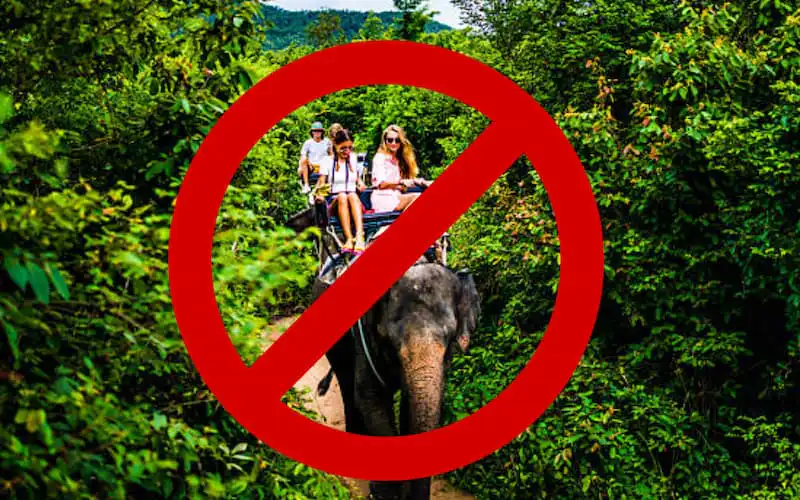
Elephants may need to be rescued when their working conditions, health, or living environment no longer support their physical and psychological welfare.
Many captive elephants in Thailand have previously been used for:
- Logging
- Tourist rides
- Trekking camps
- Circus-style performances
- Street entertainment
- Painting and staged tricks
- Close-contact photography
- Scheduled bathing experiences
Some are rescued after becoming too old, injured, or unwell to continue working. Others may be kept in conditions with limited movement, poor nutrition, inadequate veterinary care, prolonged restraint, or little opportunity to socialise with other elephants.
A 2026 assessment by World Animal Protection examined 2,849 elephants across 236 tourism venues in Thailand. It found that 69% were living in conditions rated as poor or unacceptable. The reported concerns included tight restraints, limited social contact, inadequate diets, insufficient veterinary care, and forced interactions with tourists.
An elephant may also require rescue when its owner can no longer afford the considerable cost of food, land, medical treatment, and daily care. In other cases, a sanctuary may negotiate the elephant’s retirement before its condition becomes more serious.
Why Have So Many Elephants Been Used in Tourism?
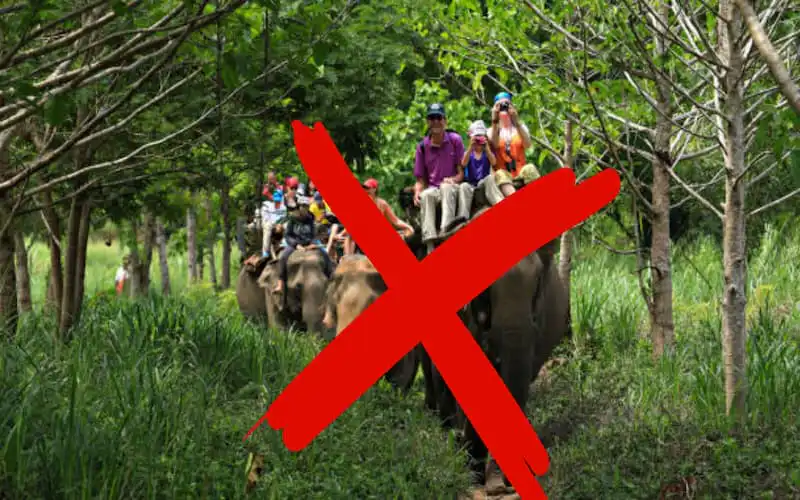
Elephants have worked alongside people in Thailand for generations, particularly in the logging industry.
When commercial logging in natural forests was banned in 1989, many elephants and their handlers lost their main source of income. As Thailand’s tourism industry expanded, some former logging elephants were moved into riding camps, trekking attractions, circuses, and street entertainment.
These activities generated income, but they often required elephants to follow repetitive schedules, carry visitors, perform unnatural movements, or remain under close human control.
Public awareness has since led to a decline in traditional elephant rides and circus-style performances. However, these activities have sometimes been replaced with experiences promoted as more responsible, such as tourist bathing, washing, touching, and close-contact feeding.
World Animal Protection reports that more than half of the elephants assessed in 2024 were held at venues offering washing or caregiving-style activities. Although these experiences may appear harmless, they can still require elephants to follow visitor schedules and accept repeated contact from strangers.
What Happens to Elephants Physically When They Are Mistreated?
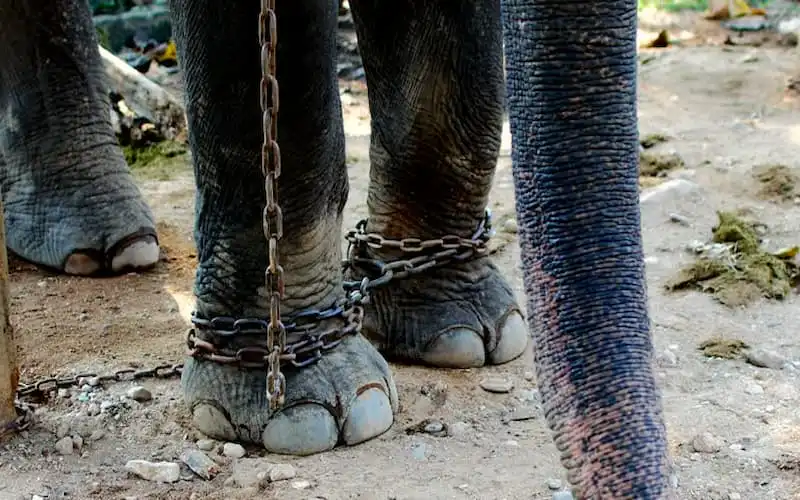
The physical effects of mistreatment vary according to the elephant’s age, previous work, diet, living environment, and access to healthcare.
Elephants used for demanding tourism or labour may experience:
- Foot and toenail problems
- Joint pain and stiffness
- Muscle strain
- Pressure wounds
- Skin injuries
- Old scars
- Poor body condition
- Dehydration
- Digestive problems
- Dental deterioration
- Reduced mobility
- Untreated infections
Foot problems are particularly serious because elephants spend much of their lives standing and walking. Long periods on concrete, restricted movement, unsuitable ground, or inadequate foot care can lead to painful cracks, damaged nails, inflammation, and infection.
Older elephants may also have worn or missing teeth. This can make it difficult for them to chew tough grasses, branches, and other fibrous food. Without an adapted diet, they may lose weight even when food appears to be available.
Restrictive living conditions can create further problems. According to World Animal Protection’s 2026 findings, more than half of the elephants assessed were kept on short chains during the day, and many spent long periods standing on concrete in noisy surroundings.
Some injuries improve after rescue, while chronic conditions such as arthritis, limited mobility, or severe dental problems may require lifelong management.
What Happens to Elephants Mentally When They Are Mistreated?
The psychological effects of mistreatment may be less visible than physical wounds, but they can be equally significant.
Elephants are intelligent and highly social animals. They naturally communicate, form long-term relationships, explore large areas, forage for varied foods, and make decisions throughout the day.
When they are kept in isolation, closely restrained, repeatedly controlled, or denied opportunities to behave naturally, they may develop signs of prolonged stress.
These can include:
- Repetitive swaying
- Rocking
- Head-bobbing
- Withdrawal
- Hypervigilance
- Difficulty resting
- Fear of unfamiliar people
- Strong reactions to sounds or equipment
- Uncertainty in open spaces
- Defensive or aggressive behaviour
Repetitive movements are sometimes described as stereotypic behaviour. They can develop when an animal has little control over its environment or cannot respond naturally to stress, boredom, fear, or frustration.
A rescued elephant may continue these behaviours even after reaching a safer place. This does not mean the sanctuary has failed or that the elephant is naturally aggressive. The behaviour may have developed over many years and can take considerable time to reduce.
Elephant Nature Park founder Lek Chailert has described newly rescued elephants arriving with severe psychological difficulties, including withdrawal, aggression, and repeated head movements. Her team uses gentle treatment and gradual introductions rather than actions that may make the elephants feel threatened.
How Does an Elephant Rescue Actually Happen?
An elephant sanctuary cannot normally arrive at a tourism venue and simply remove an elephant.
Captive elephants usually have legal owners. A rescue may therefore require a purchase, transfer, retirement agreement, lease, or another formal arrangement.
Before the elephant can be moved, the process may involve:
- Negotiating with the owner
- Confirming ownership records
- Raising funds
- Assessing the elephant’s health
- Securing transport documentation
- Planning the journey
- Preparing a suitable vehicle
- Arranging experienced caregivers
- Coordinating veterinary support
- Preparing space at the sanctuary
The process can take weeks, months, or longer. Sanctuaries must consider not only the urgency of the elephant’s situation but also whether they have enough land, food, staff, veterinary support, and funding to care for the elephant throughout the rest of its life.
Rescue should never be treated as a one-time purchase. The larger commitment begins after the elephant arrives.
How Is an Elephant Prepared for Rescue and Transport?
Before transport, the rescue team needs to understand the elephant’s health, mobility, temperament, and previous experience with vehicles.
An elderly elephant with joint problems requires different planning from a younger elephant in relatively good physical condition. An elephant that has rarely travelled may also react differently from one that has frequently been transported between tourism venues.
Preparations may include:
- Examining visible injuries
- Reviewing known medical conditions
- Assessing the elephant’s ability to stand during travel
- Selecting a safe route
- Preparing food and water
- Creating a secure transport area
- Arranging rest stops when necessary
- Assigning familiar and experienced caregivers
- Preparing for possible distress during the journey
The elephant is generally transported in a specially prepared truck that allows it to stand safely. Caregivers monitor its balance, breathing, appetite, hydration, and behaviour throughout the journey.
The goal is not to create a dramatic rescue moment. It is to move the elephant as calmly and safely as possible.
What Happens When a Rescued Elephant Arrives at a Sanctuary?
Arrival at a sanctuary can be overwhelming.
The elephant is suddenly surrounded by unfamiliar sounds, smells, people, terrain, food, and possibly other elephants. Even positive changes, such as having more space, can initially cause uncertainty.
The first priorities are usually:
- Fresh water
- Appropriate food
- Shade and shelter
- A secure place to rest
- Close observation
- Veterinary assessment
- Minimal unnecessary disturbance
The elephant may initially remain in a quieter area rather than immediately entering the main sanctuary grounds or meeting the herd.
Some elephants begin exploring relatively quickly. Others remain cautious, hesitate to enter open spaces, or continue movements associated with their previous environment.
There is no correct timetable. The care team must respond to the elephant in front of them rather than expecting every new arrival to follow the same process.
How Are a Rescued Elephant’s Health Problems Treated?
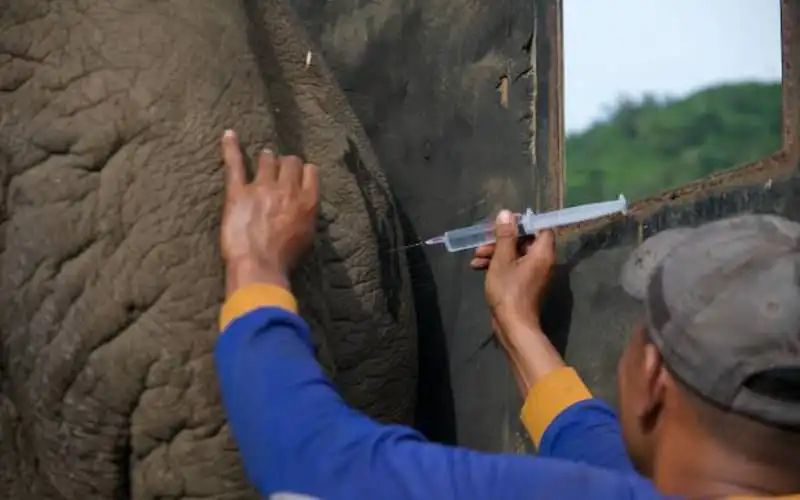
Once the elephant has settled enough to be examined safely, veterinarians and caregivers can develop an individual care plan.
The assessment may include:
- Feet and toenails
- Joints and range of movement
- Wounds and scars
- Skin condition
- Weight and muscle condition
- Teeth and chewing ability
- Eyesight
- Hydration
- Digestion
- Signs of infection
- Existing disabilities
Treatment may involve medication, wound care, foot treatment, nutritional changes, exercise adjustments, or modifications to the elephant’s living area.
An elephant with arthritis may need softer ground and shorter walking distances. An elephant with damaged teeth may require chopped vegetation or specially prepared food. One with impaired vision may need a predictable layout and additional guidance from familiar caregivers.
The aim is not always to return an elderly or injured elephant to perfect health. In many cases, the priority is comfort, pain management, mobility, and a better quality of life.
What Do Rescued Elephants Eat During Recovery?
A rescued elephant’s diet must reflect its age, health, dental condition, body weight, and ability to digest different foods.
A balanced sanctuary diet may include:
- Grasses
- Leaves
- Branches
- Banana plants
- Sugar cane
- Locally available vegetation
- Selected fruits
- Specially prepared supplementary foods
Fruit is often enjoyed by elephants, but it should not form their entire diet. Elephants require large quantities of fibrous vegetation and naturally spend much of the day eating and foraging.
Older elephants or those with worn teeth may need softer meals. Supplementary rice balls can also be prepared for elephants that need extra nutrition or food that is easier to chew.
Dietary changes should be introduced carefully. An elephant accustomed to a limited or unsuitable diet may need time to adjust to unfamiliar foods.
How Do Rescued Elephants Learn to Trust Again?
Trust does not begin with touching or close interaction. It develops through predictable, respectful care.
Elephant caregivers learn to recognise each elephant’s:
- Body language
- Preferences
- Fears
- Daily habits
- Comfort level
- Reactions to people
- Relationships with other elephants
Trust-building may involve providing food at regular times, approaching calmly, avoiding unnecessary restraint, and allowing the elephant to move away.
An elephant that has spent years responding to commands may initially be unsure what to do when given choices. It may hesitate before walking into a new area, entering water voluntarily, approaching another elephant, or resting in an open space.
Caregivers should not force these moments. Their role is to create a safe and consistent environment in which the elephant can begin making decisions at its own pace.
Recovery can be slow, but small changes matter. Choosing to approach a caregiver, resting more comfortably, or exploring an unfamiliar area can all indicate growing confidence.
At What Stage Can a Rescued Elephant Socialise With Other Elephants?
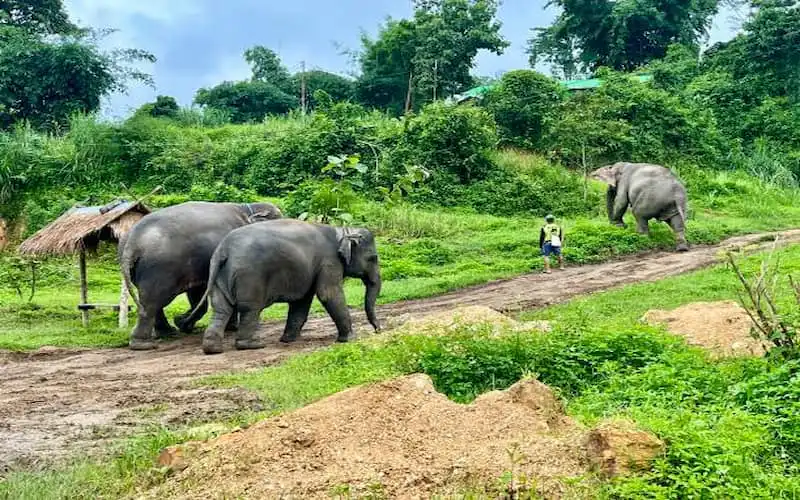
A rescued elephant may be allowed to socialise once the care team has assessed its health, behaviour, confidence, and reaction to the resident herd.
There is no fixed number of days or weeks. Some elephants may show interest in others soon after arriving, while those with limited social experience, illness, injuries, or severe anxiety may need much longer.
Before direct contact, the team considers:
- Age
- Sex
- Physical health
- Mobility
- Temperament
- Previous social experience
- Stress levels
- Communication style
- Reactions from resident elephants
The first stage may involve allowing elephants to see, smell, hear, and communicate with one another from a safe distance.
If their body language remains calm and interested, they may gradually be allowed closer contact under careful supervision. The caregivers watch for signs of compatibility, discomfort, avoidance, or aggression.
Some rescued elephants form close friendships quickly. Others prefer particular companions or remain more independent.
Not every elephant needs to join one large herd. Bulls, elderly elephants, mothers with calves, or elephants with specific medical and behavioural needs may require different social arrangements.
At established sanctuaries, new arrivals are often given an initial adjustment period and then introduced gradually. The priority is not to force friendship but to give each elephant the opportunity to develop safe and compatible relationships.
How Do Elephants Begin Behaving Naturally Again?
Recovery involves more than treating injuries. Elephants also need opportunities to use their bodies, senses, intelligence, and social skills.
Depending on their condition, rescued elephants may gradually begin to:
- Walk and explore
- Forage for vegetation
- Pull grass and branches
- Socialise
- Communicate through sound and touch
- Rest in shaded areas
- Cover themselves with dust
- Play in mud
- Enter pools voluntarily
- Investigate unfamiliar objects
- Choose where to spend their time
An elephant that previously followed a strict tourist schedule may not immediately understand how to use open space. It may remain near familiar structures or wait for instructions.
Caregivers can support natural behaviour through suitable surroundings and enrichment, but participation should remain voluntary.
Readers can learn more about the animals’ physical, dietary, and social needs through these facts about Asian elephants.
What Does Long-Term Recovery Look Like?
Elephant recovery is rarely a simple transformation from mistreated to fully healed.
Physical wounds may improve within weeks or months, while chronic pain, dental problems, reduced mobility, or visual impairment may require lifelong care.
Psychological and social recovery can take even longer.
Signs of progress may include:
- A healthier body condition
- Improved movement
- Better sleep
- Reduced repetitive behaviour
- Interest in new surroundings
- A willingness to forage
- More relaxed body language
- Voluntary bathing or mud play
- Trust in familiar caregivers
- Friendship with another elephant
These changes may happen gradually and may not always continue in a straight line. An elephant can become more confident while still reacting strongly to particular sounds, objects, or situations connected to its past.
Visitors can meet the rescued elephants at Samui Elephant Haven and learn how individual history, age, health, and personality shape each elephant’s care.
Can Rescued Elephants Return to the Wild?
For many elephants rescued after years in captivity, release into the wild is not safe or realistic.
Possible barriers include:
- Dependence on human-provided food
- Chronic injuries
- Advanced age
- Limited survival skills
- Lack of experience in a wild herd
- Ongoing medical needs
- Insufficient protected habitat
- Legal restrictions
- Risk of conflict with nearby communities
Placing an unprepared elephant in a forest could endanger the animal, wild elephant groups, and people living nearby.
For these elephants, lifelong sanctuary care is often the most responsible outcome. A sanctuary can provide food, veterinary care, suitable space, companionship, and freedom from commercial work while continuing to meet needs developed during captivity.
How Can Visitors Support Rescued Elephants Responsibly?
Ethical sanctuary visits can help fund land, food, caregivers, veterinary treatment, facilities, and future rescue work.
Visitors can support elephant welfare by:
- Avoiding riding and performances
- Choosing observation-led experiences
- Avoiding forced bathing and staged contact
- Respecting safety boundaries
- Following caregiver instructions
- Donating through official channels
- Supporting food and medical programmes
- Joining structured volunteer programmes
- Sharing accurate information about elephant welfare
A responsible sanctuary should not be judged by how closely visitors can approach an elephant. A greater distance may indicate that the elephant has more freedom and that the experience is not based on continuous human interaction.
Those who wish to contribute beyond a visit can explore official ways to support rescued elephant care.
Conclusion
At Samui Elephant Haven, we believe rescue is the beginning of a lifelong responsibility. Each elephant needs individual healthcare, nutritious food, patient caregivers, suitable companionship, and the freedom to recover at its own pace. By supporting an ethical elephant sanctuary in Thailand, visitors can help mistreated elephants leave demanding working lives behind and receive the long-term care they deserve.
FAQ
Why do elephants in Thailand need to be rescued?
Some elephants are rescued after suffering injuries, poor living conditions, prolonged restraint, inadequate healthcare, forced tourist interactions, or years of physically demanding work.
What happens immediately after an elephant is rescued?
The immediate priorities are safe transport, food, water, rest, close observation, and an assessment of the elephant’s physical and psychological condition.
How does mistreatment affect an elephant mentally?
Prolonged stress may lead to fear, withdrawal, repetitive swaying, head-bobbing, difficulty resting, defensive behaviour, or uncertainty when the elephant is given more space and choice.
When can a rescued elephant socialise with a herd?
Socialisation can begin once caregivers have assessed the elephant’s health, behaviour, confidence, and reactions to other elephants. Introductions are gradual and follow no fixed timetable.
Do rescued elephants recover completely?
Some physical and behavioural problems improve significantly, but chronic injuries and long-term psychological effects may require lifelong care.
Why can rescued elephants not simply return to the wild?
Many have lived in captivity for decades and may lack survival skills, depend on human care, have medical conditions, or be unable to integrate safely into a wild herd.
