
Visiting Samui Elephant Haven gives travellers the opportunity to meet rescued Asian elephants while learning about their histories, behaviour, diet, and long-term care.
Located in northern Koh Samui, the sanctuary covers approximately 60 rai, or more than 23 acres, across hills and jungle with natural lakes and man-made pools. It is currently home to 14 rescued elephants from different parts of Thailand, including elephants previously associated with trekking camps and the logging industry.
The main visitor programme lasts three hours and is available in the morning and afternoon. Although the exact flow may vary, the official programme includes registration, a safety introduction, elephant feeding, rice-ball preparation, a guided walk, elephant education, and a vegetarian meal.
What Should You Know Before Booking a Visit?
Samui Elephant Haven currently offers two three-hour tours each day:
- Morning tour: 9:00 a.m.–12:00 p.m.
- Afternoon tour: 2:00 p.m.–5:00 p.m.
The programme includes:
- Round-trip hotel transfers
- An English-speaking guide
- A safety introduction
- Feeding the elephants fruit and grass
- Preparing nutritious rice balls
- A guided walk through the sanctuary
- Learning about the elephants’ histories
- Education about Asian elephant behaviour and life stages
- A vegetarian meal
Current admission prices are:
- Adults: 3,000 THB
- Children aged 4–11: 1,500 THB
- Children under 4: Free
The official website currently states that payment is accepted in cash on arrival. Visitors are also warned not to transfer money to a bank account before the trip.
Programme details can change, so visitors should confirm current times, prices, transfer arrangements, and payment instructions directly with the sanctuary before booking.
What Happens When You Arrive at Samui Elephant Haven?
The visit begins with registration at the sanctuary.
Guests are then shown a safety video and introduced to Samui Elephant Haven before the main activities begin. This opening stage helps visitors understand how to move through the sanctuary and how to follow instructions around the elephants.
The experience differs from a conventional animal attraction. The elephants are not presented as performers, and visitors are expected to respect the sanctuary’s safety rules and the animals’ space.
Because round-trip hotel transfers are included with the three-hour tour, collection details are arranged as part of the booking. The official website does not publish one standard pickup time for every guest, so visitors should confirm their individual transfer arrangements directly.
How Does the Sanctuary Introduce Visitors to the Elephants?
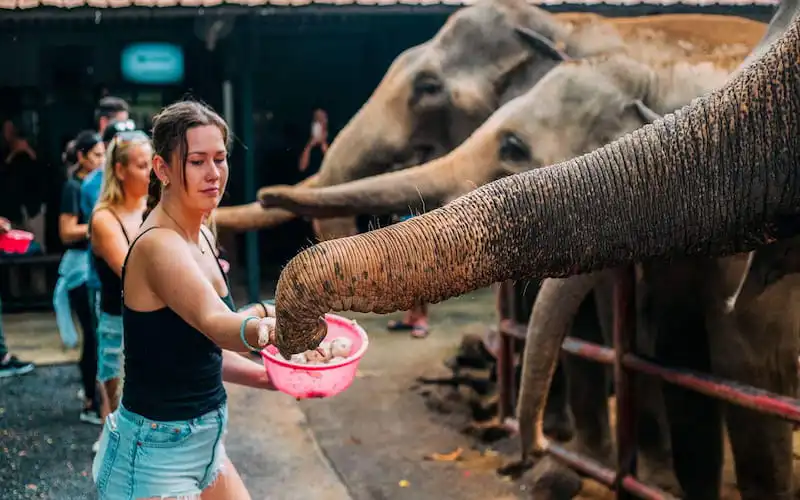
The safety video and introduction prepare guests for meeting the rescued elephants in a responsible way.
Visitors learn that the sanctuary is a permanent home for elephants that have experienced difficult working conditions. The introduction also establishes that the visit focuses on education, supervised feeding, and observing the elephants within the sanctuary environment.
This helps guests understand that the quality of the experience should not be measured by how closely they can touch an elephant or whether an elephant performs a particular behaviour.
Instead, the tour is designed to help visitors learn about the animals as individuals.
What Is the Elephant Feeding Experience Like?
The three-hour programme includes feeding the elephants a selection of fruit, rice-balls and grass under the guidance of the sanctuary team.
This gives visitors an opportunity to observe how elephants use their trunks to smell, grasp, lift, and position food.
Guests should only offer food that has been provided or approved by the sanctuary. Bringing outside food or feeding an elephant independently may interfere with the animal’s diet or the way the activity is managed.
The feeding session is only one part of the visit. It is followed by food preparation, a guided walk, and education about the elephants’ histories and behaviour.
How Do Visitors Prepare Rice Balls for the Elephants?

Visitors also learn how to make nutritious rice balls as part of the official programme.
The activity introduces guests to one of the practical tasks involved in elephant care. It also shows that feeding rescued elephants involves more preparation than simply offering pieces of fruit.
The official website does not state that one standard recipe is used for every elephant or that the rice balls are intended only for a particular age group or medical condition.
The sanctuary team can therefore provide the most accurate explanation of the ingredients, preparation method, and purpose during the visit.
What Can You Expect During the Guided Walk?
The programme includes a guided walk through the sanctuary to meet the rescued elephants and hear about their past experiences.
Samui Elephant Haven covers approximately 60 rai across hills, jungle, natural lakes, and man-made pools. The elephants live within this sanctuary environment rather than appearing in a traditional performance area.
What visitors see during the walk may depend on where the elephants are and how they choose to spend their time.
The official programme confirms that visitors walk through the park and meet the rescued elephants, but it does not guarantee that every elephant will display a particular behaviour during every tour.
This means one group’s experience may differ slightly from another’s, which is natural when animals are not being required to perform on demand.
What Will You Learn About the Rescued Elephants?
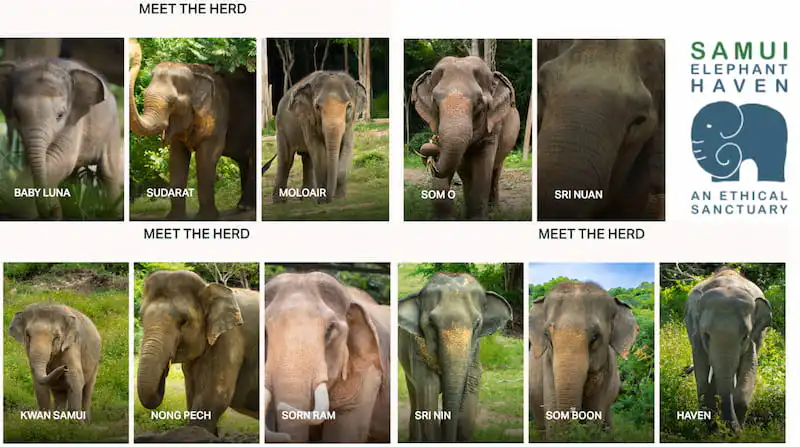
During the walk, the guide shares the elephants’ past stories.
Our herd includes elephants with different backgrounds, ages, and individual histories. The sanctuary states that its elephants came from challenging circumstances, including trekking camps and the logging industry.
Learning these stories helps visitors understand why elephant rescue is not simply about moving an animal to a new location.
Each elephant requires long-term food, land, daily care, and attention to its individual needs. The information shared during the tour may depend on which elephants the group meets and what the guide considers most relevant.
Visitors can also learn more about our sanctuary’s residents through our official page introducing the rescued elephants at Samui Elephant Haven.
How Does the Tour Explain Elephant Behaviour and Life Stages?
Learning about the natural behaviour of Asian elephants is an official part of the programme.
The guide helps visitors understand how elephants behave when they are not being asked to carry tourists, complete tricks, or participate in a staged show.
The tour also includes information about elephants at different stages of life. Age can influence an elephant’s behaviour, physical condition, diet, and daily care.
The official website does not publish a fixed lesson plan, so the exact information shared may depend on the elephants present and the observations made during the visit.
This allows the educational part of the tour to connect with the animals visitors actually see rather than following a rigid presentation.
Readers interested in learning more before their visit can explore these facts about Asian elephants.
Can You Take Photographs During the Visit?
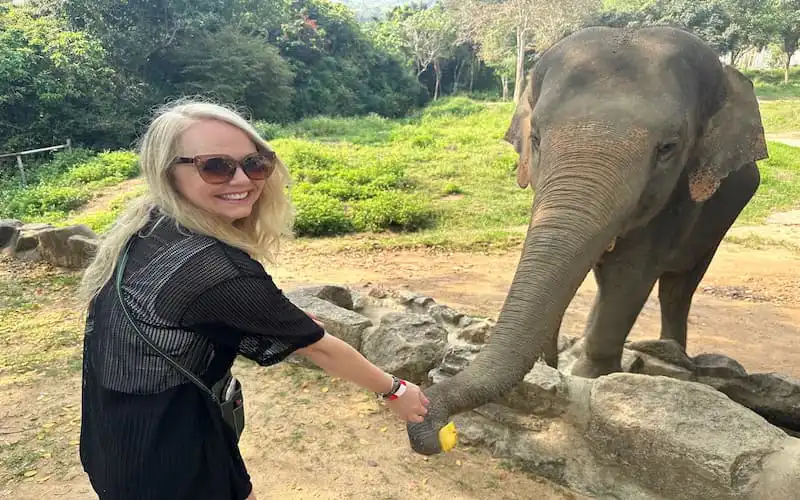
Visitors can take photographs, but they should do so without disturbing the elephants or encouraging staged interaction.
Our official photography guidance recommends:
- Maintaining a safe and respectful distance
- Using a zoom lens rather than moving too close
- Avoiding flash photography
- Moving calmly
- Keeping noise low
- Not requesting staged interactions
- Avoiding disruption to natural behaviour
- Following the sanctuary’s rules
The sanctuary encourages visitors to photograph elephants honestly within their surroundings rather than treating close contact as the main purpose of the image.
A photograph of an elephant walking, eating, or spending time in its environment can communicate more about sanctuary life than a staged pose.
Visitors can review our full guide toethical elephant photography before arriving.
Does the Tour Include Elephant Riding or Bathing?
Elephant riding and bathing are not listed as activities in any of our programmes as these are highly unethical services that would harm the elephants.
The published visitor experience focuses on:
- Feeding fruit and grass
- Preparing nutritious rice balls
- Walking through the sanctuary
- Hearing the elephants’ past stories
- Learning about Asian elephant behaviour
- Learning about different life stages
- Sharing a vegetarian meal
Visitors should therefore expect an educational sanctuary experience rather than a traditional elephant attraction centred on rides, shows, or bathing sessions.
How Does the Tour End?
The programme concludes with a vegetarian meal.
The meal is included in both the morning and afternoon tours and takes place after the elephant-related activities and guided walk.
This final part of the programme gives visitors time to reflect on what they have learned about the elephants, their histories, and the long-term responsibilities involved in sanctuary care.
After the meal, guests prepare for departure and the included return transfer.
Which of Samui Elephant Haven’s Programmes Is Right for You?
Samui Elephant Haven offers three visitor programmes, each designed for a different schedule and level of involvement: a three-hour sanctuary tour, a shorter feeding programme, and a full-day volunteer experience.
Three-Hour Sanctuary Tour
The three-hour tour is the most complete option for first-time visitors. It includes registration, a safety introduction, feeding the elephants fruit and grass, preparing nutritious rice balls, walking through the park, hearing the elephants’ stories, learning about Asian elephant behaviour and life stages, and enjoying a vegetarian meal.
Two sessions are available:
- Morning: 9:00 a.m.–12:00 p.m.
- Afternoon: 2:00 p.m.–5:00 p.m.
Current prices are:
- Adults: 3,000 THB
- Children aged 4–11: 1,500 THB
- Children under 4: Free
Round-trip hotel transfers and an English-speaking guide are included. This programme is best suited to visitors who want a broader introduction to the sanctuary and enough time to learn about several rescued elephants.
Feeding Programme
The feeding programme is a shorter option lasting approximately 45 minutes to one hour. It includes feeding the elephants fruit and grass, preparing nutritious rice balls, and learning about some of the rescued elephants and their behaviour.
Current session times are:
- Morning: 10:00 a.m. and 11:00 a.m.
- Afternoon: 1:00 p.m., 3:00 p.m., and 4:00 p.m.
Current prices are:
- Adults: 1,000 THB
- Children aged 4–11: 500 THB
- Children under 4: Free
An English-speaking guide is included, but hotel transfers are not. This programme is most suitable for visitors with limited time who want to focus mainly on feeding and learning about the elephants.
One-Day Volunteer Programme
The one-day volunteer programme runs from 9:00 a.m.–5:00 p.m. and is limited to six participants per day. It offers a deeper look at the daily work involved in caring for the elephants.
Activities include:
- Preparing food and chopping fruit
- Helping clean designated areas
- Making a fruit cake for the elephants
- Preparing nutritious rice balls
- Learning the elephants’ life stories
- Walking through the park
- Taking respectful photographs
- Joining an optional planting or enrichment activity
Round-trip hotel transfers, English-speaking guides, vegetarian meals, and a volunteer gift are included. The programme does not include elephant riding or bathing. The current price is 6,500 THB per person.
This programme is the best choice for visitors who want a more involved experience and a closer understanding of the sanctuary’s daily care routines.
Visitors should confirm current schedules, prices, and availability on the official Koh Samui elephant tour programme page before booking.
What Should You Wear and Bring?
Because the visit takes place in an outdoor sanctuary environment, practical clothing is recommended.
Visitors should consider:
- Lightweight, breathable clothes
- Comfortable footwear
- Sun protection
- A hat
- Insect repellent
- Weather-appropriate rain protection
- A camera or phone
- Enough cash for the programme booked
Before travelling, check the weather and confirm the sanctuary’s latest advice.
We also published a guide explaining what to wear to an elephant sanctuary in Koh Samui.
How Can You Be a Respectful Visitor?
Visitors can support a safe and responsible experience by following the sanctuary team’s instructions throughout the tour.
During the visit:
- Remain with the group
- Listen to the guide
- Move calmly
- Keep noise low
- Respect photography boundaries
- Offer only approved food
- Supervise children
- Avoid requesting staged interactions
- Accept that an elephant may move away
The visit should be valued for what guests learn about the elephants rather than for the amount of physical contact available.
Respectful observation allows the elephants to remain the focus of the experience without being treated as performers.
Conclusion
At Samui Elephant Haven, we want every visitor to leave with a deeper understanding of rescued elephants, their individual histories, and the care they need throughout their lives. A visit to our elephant sanctuary in Samui combines supervised feeding, food preparation, a guided sanctuary walk, elephant education, and time to reflect on why responsible care matters.
FAQ
How long is the Samui Elephant Haven tour?
The standard morning and afternoon tours each last three hours.
What times do the tours begin?
The morning tour runs from 9:00 a.m.–12:00 p.m. The afternoon tour runs from 2:00 p.m.–5:00 p.m.
Are hotel transfers included?
Round-trip transfers are included with the three-hour tour and the full-day volunteer programme. Transfers are not included with the shorter feeding programme.
Is a meal included?
A vegetarian meal is included with the three-hour tour. Vegetarian meals are also included in the full-day volunteer programme.
Can children visit Samui Elephant Haven?
Yes. The official programme lists a child rate for ages 4–11, while children under four can currently join free of charge.
Can visitors ride or bathe the elephants?
Riding and bathing are not included in the published three-hour tour. The full-day volunteer programme specifically states that it includes no riding and no bathing.
How should visitors pay?
The official website currently states that payment is accepted in cash on arrival and warns visitors not to transfer money to a bank account before the trip.
Is photography allowed?
Yes, but visitors should maintain a respectful distance, avoid flash, move quietly, avoid staged interactions, and follow the sanctuary’s photography rules.
