
The moment that matters most in an elephant rescue is rarely the one captured on camera. It is not simply the day a chain comes off or the moment a transport vehicle reaches the sanctuary gates. For an elephant that may have spent decades working in logging, trekking, performances, street begging, or tourist photography, arrival is the beginning of another challenge: learning that life now follows different rules.
A rescued elephant journey to sanctuary is therefore a process, not a single event. It begins with the decision to move an elephant, continues through transport and veterinary assessment, and can take months or years of patient adjustment before the elephant becomes comfortable with new routines, caregivers, and other elephants.
At Samui Elephant Haven, that journey can be seen in elephants from trekking, logging, performance, street-begging, and tourist-photography backgrounds. Looking at the process stage by stage shows what happens after the dramatic rescue moment, when the quieter work begins.
Stage 1: The Call That Starts an Elephant Rescue
An elephant rescue story often begins with a conversation. A tourism business may close or change direction. An owner may no longer be able to provide suitable care. An older or injured elephant may need retirement. In other cases, welfare concerns can lead to discussions about moving an elephant somewhere better equipped for long-term care.
Before accepting an elephant, a sanctuary must understand the animal’s ownership status, health, temperament, current conditions, transport needs, and its own capacity to provide long-term care.
Why can’t a sanctuary rescue every elephant it hears about?
Accepting an elephant creates a long-term responsibility for food, land, staff, veterinary treatment, and safe social management. Taking in more elephants than a sanctuary can support can compromise the welfare of new and existing residents.
A responsible rescue therefore starts with a difficult question: can this elephant be cared for sustainably after the move?
Before the Road: Deciding Whether an Elephant Is Ready to Travel
Transport is one of the most sensitive stages. An older elephant may already be living with foot problems, joint pain, old injuries, poor body condition, or long-established fear responses.
Before travel, the care team and veterinarian consider the elephant’s physical condition, route, transport setup, food and water, heat, rest periods, and the plan for arrival. In some transfers, elephants are gradually familiarised with a transport crate before departure to reduce avoidable stress.
There is no single formula for every rescue. Some journeys take hours; documented international transfers have taken several days. The principle is the same: design the journey around the elephant rather than the timetable.
Stage 2: The Road to Sanctuary
Once the journey begins, the rescue becomes an exercise in careful observation.
Teams may travel during cooler periods when conditions allow. Stops provide opportunities to offer water and food, clear waste, and check the elephant’s behaviour and physical condition. Familiar caregivers and predictable handling can also help reduce stress.
Reaching the sanctuary is a major milestone, but the adjustment is only beginning. The elephant has entered a place filled with unfamiliar smells, sounds, ground surfaces, people, and other elephants.
Stage 3: The First Days at Sanctuary
A new arrival does not need a welcome ceremony. The first priority is usually quiet.
Depending on veterinary and management protocols, the elephant may begin in a separate or controlled area where the team can observe her without expecting immediate social interaction. She needs water, suitable food, shade, rest, and time to investigate the new environment.
The initial assessment can include:
- Feet, nails, pads, and existing wounds
- Legs, joints, mobility, and old injuries
- Teeth, mouth, weight, and body condition
- Skin condition and hydration
- Bloodwork or disease screening where appropriate
- Any urgent medical issue requiring treatment
Feet often deserve particular attention after years of hard surfaces, carrying loads, long periods standing, or inconsistent care.
These first days are about establishing a baseline. The team needs to understand the individual elephant before deciding what the next stage should look like.
Stage 4: The Long Middle of Rehabilitation
This is the part of the elephant rehabilitation journey that rarely becomes a viral video.
Progress may look ordinary: eating reliably, accepting necessary foot care, approaching a familiar mahout calmly, exploring new space, spending more time foraging, or resting with less vigilance.
Trust is built through repetition. Familiar caregivers, predictable routines, appropriate space, patient veterinary work, and the freedom to move away can gradually show an elephant that the new environment is different.
There is no fixed recovery timetable. Physical problems may improve at one pace while behavioural adjustment takes much longer. Some elephants retain reactions linked to previous experiences for years.
For a deeper look at medical, behavioural, and social recovery, read our guide to how rescued elephants heal at sanctuaries.
Stage 5: Meeting the Herd
An elephant may be physically safer long before she feels socially settled.
Introductions can begin with scent, sound, and visual contact across a safe boundary. Caregivers observe how individuals respond before allowing closer contact. Age, personality, health, past isolation, and previous social experience all influence the pace.
When relationships develop, other elephants provide something people cannot replace: elephant-to-elephant communication, companionship, social learning, play, and choice over who to spend time with.
Our article on elephant emotions and memory explores why these social bonds matter.
How Can You Tell When a Rescued Elephant Is Healing?
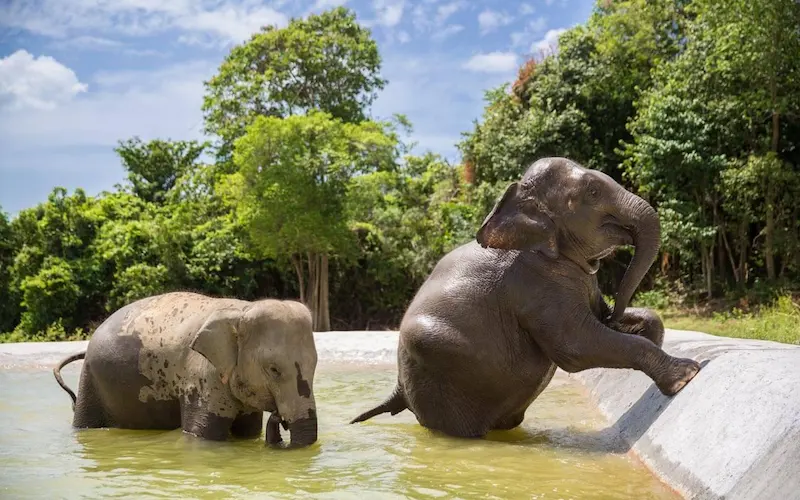
Healing is rarely one dramatic transformation. It is a pattern of changes that becomes visible over time.
Encouraging signs may include:
- Moving toward a healthier body condition
- Eating consistently and foraging naturally
- Improved mobility or better-managed chronic pain
- Voluntary dusting, mud wallowing, or bathing
- Curiosity about new spaces
- Reduced repetitive stress-related behaviours
- Calm cooperation with necessary care
- More restful sleep
- Voluntary social contact with compatible elephants
No single behaviour proves recovery. What matters is whether overall welfare is improving across physical, behavioural, and social measures.
For more detail on ongoing care, see our overview of elephant health and wellness at sanctuaries.
Koh Samui’s Rescue Stories Are Part of a Wider Thai History
Thailand’s captive-elephant story changed significantly after the 1989 logging ban, when many working elephants and mahouts had to find other sources of income. Tourism became one alternative, including trekking, performances, street begging, photography, and other visitor activities.
Koh Samui developed its own version of that history.
Plai Bank was separated from his mother when he was young and later made to walk along a beach outside a hotel, stopping for photographs and food. Sorn Ram’s life followed another route: logging in northern Thailand, street begging in Surin, and later carrying tourists on Koh Samui before reaching the Haven.
Aom’s history adds another perspective. She spent much of her life performing and carrying tourists and still reacts fearfully to some loud or unfamiliar sounds.
Their stories show why rescued elephants in Thailand cannot be treated as one category. Each rescue begins with a different body, memory, social history, and relationship with people.
Not Every Sanctuary Story Has a Happy Ending
Rescue and compassionate care do not make elephants immune to illness.
Luna was not an adult rescue. She was born at Samui Elephant Haven to Aom, one of the sanctuary’s rescued elephants. In 2023, Luna died from Elephant Endotheliotropic Herpesvirus, or EEHV, despite efforts to save her.
Her loss keeps the rescue story honest. A sanctuary can improve welfare and provide veterinary care, but it cannot promise a simple recovery arc for every elephant.
Readers can learn more through Luna’s story and memorial.
How Can You Support a Rescued Elephant on Koh Samui?
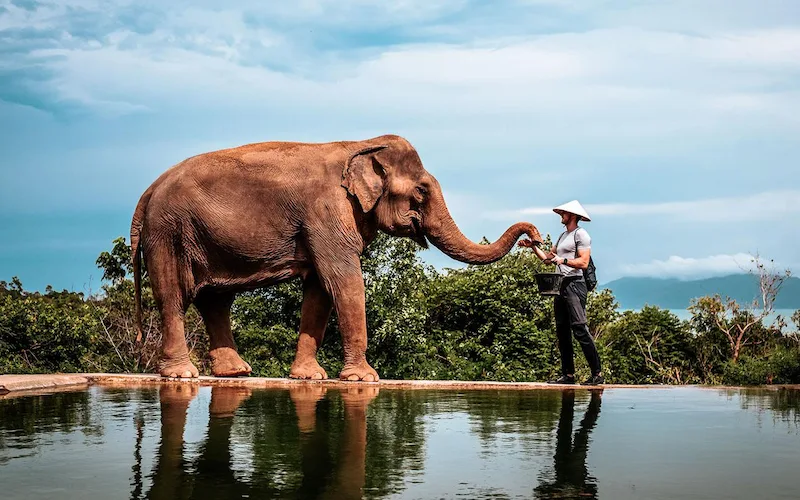
Useful support continues after the emotional rescue moment.
That can mean choosing visitor experiences that do not depend on riding or performances, contributing to food and veterinary care, or supporting an individual elephant over time.
If you are considering a visit, our guide to why ethical elephant sanctuaries matter explains what responsible tourism can contribute. You can also adopt an elephant or support elephant welfare through Samui Elephant Haven’s current support options.
The important shift is to see rescue not as the finish line, but as the beginning of a lifelong commitment.
Conclusion
At Samui Elephant Haven, we see every rescue as the start of a relationship rather than the end of a story. For anyone learning about an elephant sanctuary Samui experience, it is important to understand that rescue continues long after an elephant reaches the sanctuary.
The journey involves transport, health assessment, trust-building, ongoing care, and gradual social adjustment, with each elephant progressing at a different pace. By understanding what happens after rescue, visitors and supporters can look beyond the dramatic arrival and recognise the quieter signs that matter most: choice, comfort, companionship, and the freedom to live without being required to perform.
FAQ
How long does it take a rescued elephant to recover?
There is no standard recovery period. Some physical problems may improve over weeks or months, while chronic conditions and behavioural effects from long-term stress can require ongoing care for years.
Are rescued elephants sedated during transport?
Not necessarily. Transport protocols depend on the elephant’s health, the journey, veterinary advice, and the equipment being used. Some documented rescues have used gradual crate training and moved elephants while fully alert.
Can a rescued elephant return to the wild?
For elephants that have spent many years under human care, release may not be realistic or safe. Health problems, dependence on managed care, limited wild experience, and habitat conditions all affect what is possible.
Why do some rescued elephants sway repeatedly?
Repetitive movements such as swaying can be associated with long-term stress or restrictive past conditions. These behaviours may lessen after welfare improves, but they do not always disappear immediately.
What should visitors look for in an ethical elephant sanctuary?
Look beyond the word “sanctuary.” Consider whether elephants are free from riding and performances, can move away from visitors, have opportunities for natural behaviour and social choice, and receive transparent long-term care.
